
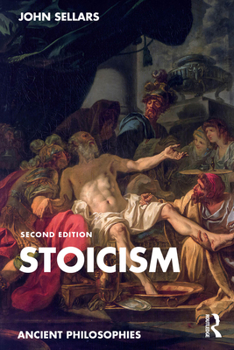

This is the first introduction to Stoic philosophy for 30 years. Aimed at readers new to Stoicism and to ancient philosophy, it outlines the central philosophical ideas of Stoicism and introduces the reader to the different ancient authors and sources that they will encounter when exploring Stoicism. The range of sources that are drawn upon in the reconstruction of Stoic philosophy can be bewildering for the beginner. Sellars guides the reader through the surviving works of the late Stoic authors, Seneca and Epictetus, and the fragments relating to the early Stoics found in authors such as Plutarch and Stobaeus. The opening chapter offers an introduction to the ancient Stoics, their works, and other ancient authors who report material about ancient Stoic philosophy. The second chapter considers how the Stoics themselves conceived philosophy and how they structured their own philosophical system. Chapters 3-5 offer accounts of Stoic philosophical doctrines arranged according to the Stoic division of philosophical discourse into three parts: logic, physics, and ethics. The final chapter considers the later impact of Stoicism on Western philosophy. At the end of the volume there is a detailed guide to further reading.
Who were the Stoics? How did they understand philosophy? How did their ideas of "ethics," "physics" (including what we call "metaphysics" as well as science), and "logic" (also much broader than what Mr. Spock engages in) join together into an organic whole? What role did the sage play in the Stoic system -- if such a creature were even possible. (Stoic agnosticism on this point was very similiar to that of the early Confucians about a "sheng ren," BTW.) Sellars begins by giving an overall answer to these questions. Then he describes the three Stoic categories -- physics, logic, and ethics -- in the following chapters. He finishes the book with a chapter on the "Stoic legacy" -- the influence they have had since their gradual disappearance in the 4th and 5th Centuries. (One surprise: John Calvin was sympathetic to the Stoics in an early writing -- I've read his commentary on Acts 17, in which Paul discusses the Christian faith with Epicurean and Stoic philosophers in Athens, and he didn't seem so open-minded there -- perhaps because he was jousting at "Papist" shadows. But Sellars spreads his comments out through the centuries -- this section is very succinct, but interesting.) I wanted a good general introduction to Stoicism, before reading (as I plan to) more of the primary and secondary material. This book turned out to be great for that purpose. It's simple, fairly straightforward, though Sellars also interacts in a light way with the scholarship, and does an excellent job of "mapping out" key figures and questions. Sellars is objective, seldom intruding his own views on the discussion, but (in general) describing what is understood about the Stoics, and clearly marking out where opinions differ. All in all, an excellent introduction to an interesting school of thinkers. One of several things that piqued my curiosity, was the dissonance between the tone of Cleanthes' Hymn to Zeus, and the role "God" plays in abstract Stoic philosophy. Sellars doesn't pick up on this, but the contradictions in Stoic philosophy seem as interesting to me as the continuity.
ThriftBooks sells millions of used books at the lowest
everyday prices. We personally assess every book's quality and offer rare, out-of-print treasures. We
deliver the joy of reading in recyclable packaging with free standard shipping on US orders over $15.
ThriftBooks.com. Read more. Spend less.
