


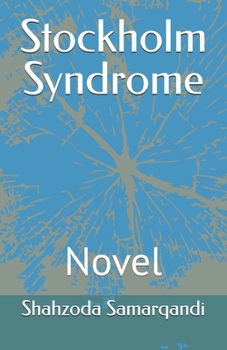
Stockholm Syndrome: Novel

Stockholm Syndrome (original Persian/Tajik title: سندرم استکهلم / Sindromi Stokgol'm) is the debut novella by Tajik writer, journalist, and poet Shahzoda Samarqandi Nazarova (born 1975 in Samarkand, Uzbekistan; often credited as Shahzoda Samarqandi or S. Samarqandi). First published in 2007 (with later editions in Persian, Tajik Cyrillic, Russian, and an English translation around 2017), it is widely regarded as one of the most controversial and groundbreaking works in contemporary Tajik literature.
The story centers on a young woman's intense internal and external conflict as she grapples with the choice between pursuing her professional career and embracing motherhood. Set against the backdrop of a deeply traditional, patriarchal, and conservative Tajik society, the protagonist's dilemma exposes societal expectations around gender roles, family obligations, and women's autonomy. The narrative explores themes of personal freedom, identity, emotional entrapment, and the psychological pressures that can lead to a form of internalized acceptance or "syndrome"-like attachment to oppressive structures-echoing the metaphorical use of Stockholm Syndrome (where captives develop bonds with their captors) to critique how women may become complicit in or attached to the very systems that limit them.
The novella shocked readers upon release due to its candid, taboo-breaking portrayal of these issues in a society where such topics were rarely discussed openly, especially by a female author. Reviewers and media (including Radio Free Europe/Radio Liberty) described it as "revolutionary," "taboo-breaking," and "ahead of its time." It won acclaim, including recognition as a winner of the Best Female Author award at the Eurasian region level, and established Samarqandi as a bold feminist voice in Central Asian literature.
Length: Approximately 92 pages (in the Persian edition).Style: Emotional, introspective, and direct; it blends personal remembrance with sharp social critique.Impact: The book challenged conservative norms around women's roles in Tajik/Central Asian culture, sparking debate and cementing Samarqandi's reputation as a pioneering writer. She has since published other novels like Motherland (Mādarvatān, 2013; English translation available) and Registan (2016), often exploring similar themes of identity, exile, memory, and gender in post-Soviet Central Asia. Her works have been translated into English, Arabic, Russian, Dutch, and others.Customer Reviews
ThriftBooks ® and the ThriftBooks ® logo are registered trademarks of Thrift Books Global, LLC
