


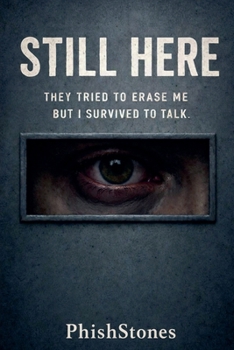
Still Here

The narrative begins with a sound: the whistle of a bullet passing near the author's head. This is not the opening of an action movie, but the prelude to a nightmare. Without explanation, without charges being read, and without the basic due process that forms the bedrock of American civic mythology, the author is shot at, tased, savagely beaten, and processed into oblivion. From the very first pages, Still Here dismantles any comfortable illusions about "innocent until proven guilty." The protagonist is not processed as a suspect; he is processed as inventory, as a problem to be managed, and ultimately, as raw material for a bureaucracy of pain.
The core of the book's first act is a harrowing, minute-by-minute dissection of long-term solitary confinement. PhishStones does not describe solitude; he documents sensory eradication. The cell is a gray void. Time is liquid and meaningless, measured only in the irregular slide of tasteless food through a steel slot. The constant hum of fluorescent lights becomes a psychological weapon; the lack of a shower, a toothbrush, or human contact is a calculated tool of dehumanization. He describes with terrifying clarity how the mind, starved of external stimuli, begins to consume itself-conversations with cracks in the wall, the fracturing of memory, the slow, chilling erosion of the self. This is not punishment for a crime. It is a laboratory experiment in breaking a human being, and the author is its subject.
The physical torture is methodical and state-sanctioned. The centerpiece of this horror is the restraint chair. PhishStones spares no detail in describing this medieval-looking device: the cold metal, the straps cinched to the point of cutting off circulation, the complete and total immobilization designed to transform discomfort into agony, and agony into a neurological reset. Sessions lasting twelve, sixteen hours. The involuntary muscle spasms, the loss of bladder control, the point where coherent thought disintegrates into animal sound. Crucially, he emphasizes the banality of the evil: guards-ordinary people-perform these acts as routine procedure. Nurses conduct "wellness checks" on a man actively being tortured, checking a box that says "responsive" before walking away. The system isn't rogue; it is functioning exactly as designed, with paperwork that justifies every moment of suffering.
Customer Reviews
ThriftBooks® and the ThriftBooks® logo are registered trademarks of Thrift Books Global, LLC
