


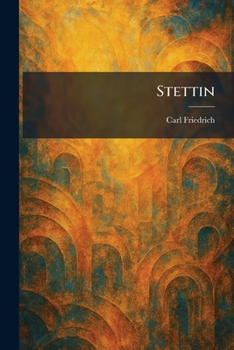
Stettin

"Stettin" offers a comprehensive exploration of the historical and architectural landscape of one of the Baltic region's most significant port cities. Written by Carl Fredrich, this work delves into the rich urban fabric of Stettin, examining its evolution from a medieval stronghold to a bustling center of trade and industry.
Through a detailed analysis of the city's landmark structures, from its grand churches to its civic monuments, the book highlights the unique blend of Gothic, Renaissance, and Baroque influences that define the local aesthetic. Readers will discover the history of the House of Pomerania and the city's strategic role within the Hanseatic League. By focusing on both the aesthetic beauty and the functional design of the urban environment, Fredrich provides an essential record of the city's cultural heritage.
"Stettin" serves as an invaluable resource for those interested in European urban development, German art history, and the architectural legacy of the Baltic coast. This work remains a poignant testament to the city's historical identity and its enduring significance in the story of Northern Europe.
This work has been selected by scholars as being culturally important, and is part of the knowledge base of civilization as we know it. This work was reproduced from the original artifact, and remains as true to the original work as possible. Therefore, you may see the original copyright references, library stamps (as most of these works have been housed in our most important libraries around the world), and other notations in the work.
This work is in the public domain in the United States of America, and possibly other nations. Within the United States, you may freely copy and distribute this work, as no entity (individual or corporate) has a copyright on the body of the work.
As a reproduction of a historical artifact, this work may contain missing or blurred pages, poor pictures, errant marks, etc. Scholars believe, and we concur, that this work is important enough to be preserved, reproduced, and made generally available to the public. We appreciate your support of the preservation process, and thank you for being an important part of keeping this knowledge alive and relevant.
Customer Reviews
ThriftBooks ® and the ThriftBooks ® logo are registered trademarks of Thrift Books Global, LLC
