


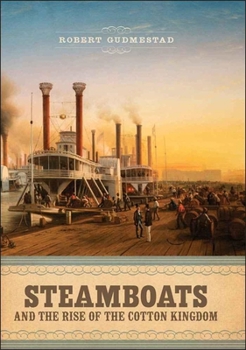
Steamboats and the Rise of the Cotton Kingdom
No Customer Reviews

The arrival of the first steamboat, The New Orleans, in early 1812 touched off an economic revolution in the South. In states west of the Appalachian Mountains, the operation of steamboats quickly grew into a booming business that would lead to new cultural practices and a stronger sectional identity. In Steamboats and the Rise of the Cotton Kingdom, Robert Gudmestad examines the wide-ranging influence of steamboats on the southern economy. From carrying cash crops to market to contributing to slave productivity, increasing the flexibility of labor, and connecting southerners to overlapping orbits of regional, national, and international markets, steamboats not only benefited slaveholders and northern industries but also affected cotton production. This technology literally put people into motion, and travelers developed an array of unique cultural practices, from gambling to boat races. Gudmestad also asserts that the intersection of these riverboats and the environment reveals much about sectional identity in antebellum America. As federal funds backed railroad construction instead of efforts to clear waterways for steamboats, southerners looked to coordinate their own economic development, free of national interests. Steamboats and the Rise of the Cotton Kingdom offers new insights into the remarkable and significant history of transportation and commerce in the prewar South.
Format:Hardcover
Language:English
ISBN:0807138398
ISBN13:9780807138397
Release Date:October 2011
Publisher:LSU Press
Length:304 Pages
Weight:1.25 lbs.
Dimensions:1.1" x 5.9" x 9.1"
Customer Reviews
0 rating
Copyright © 2025 Thriftbooks.com
Terms of Use | Privacy Policy | Do Not Sell/Share My Personal Information | Cookie Policy | Cookie Preferences | Accessibility Statement
ThriftBooks ® and the ThriftBooks ® logo are registered trademarks of Thrift Books Global, LLC
ThriftBooks ® and the ThriftBooks ® logo are registered trademarks of Thrift Books Global, LLC
