


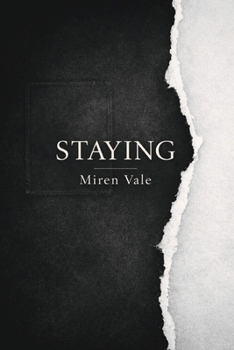
Staying: An Account

How far can you erase yourself before there's nothing left to come back to?
When Hannah Rourke disappears after a minor car accident, there is no evidence of harm, no signs of distress, and no official reason to look further. The police close the file. Her life appears to have ended cleanly.
Maeve Calder is hired not to find Hannah, but to understand her disappearance. What begins as a contained investigation expands into something more unsettling: a repeatable method, a legal structure, and a system designed to facilitate voluntary erasure without breaking the law.
As Maeve traces the logic of disappearance, she recognises it. Not as ideology or pathology, but as efficiency. Control. Restraint.
STAYING is a work of literary fiction about autonomy, consent, and the ethics of non-intervention. It refuses rescue narratives, clear villains, and moral reward. Instead, it follows the cost of understanding something fully and choosing not to stop it.
This is not a thriller.
It is an account.How far can you erase yourself before there's nothing left to come back to?
It is an account.
Customer Reviews
ThriftBooks ® and the ThriftBooks ® logo are registered trademarks of Thrift Books Global, LLC
