


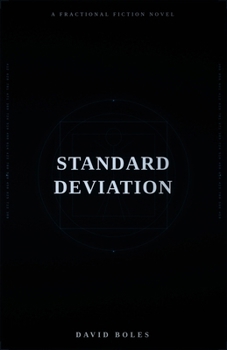
Standard Deviation: A Fractional Fiction Novel

What happens when the human body is inscribed within digital circles and squares, not as the measure of all things but as the thing to be measured?
Standard Deviation follows five characters caught within a municipal scoring system that reduces residents to three-digit numbers. Sloane Virta designed the algorithm's fairness constraints, believing she was building a tool for equity. Cassian Osei operates the surveillance infrastructure from inside a luxury tower, watching without being seen while knowing he is also watched. Tamsin Cross, a former hospital administrator whose life collapsed after her husband's cancer diagnosis, discovers her score of 412 has erased her from a housing waitlist she waited on for nearly three years. Bram Watts navigates the gig economy's algorithmic management while his newborn daughter inherits a score before she can speak. Isolde Ashworth-Chen championed the system publicly and must decide what to do when she discovers it operates differently than she claimed.
Synthesizing Leonardo da Vinci's Vitruvian Man, Jeremy Bentham's Panopticon, and William Jennings Bryan's "Cross of Gold" speech, Standard Deviation traces a trajectory from the human who measures to the human who is measured to the human sacrificed upon systems of measurement.
The eighth book in the Fractional Fiction series, Standard Deviation examines surveillance capitalism, algorithmic governance, and the human experience of being reduced to data. In a world where credit scores determine housing, employment screening algorithms reject qualified candidates, and predictive systems sort people into categories of worthy and unworthy, the novel asks: What does it mean to keep walking when the numbers have already decided who you are?
"The measured kept walking. That was what they had. That was what remained."
Customer Reviews
ThriftBooks® and the ThriftBooks® logo are registered trademarks of Thrift Books Global, LLC
