


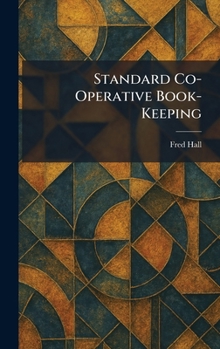
Standard Co-Operative Book-Keeping

"Standard Co-Operative Book- Keeping" is a comprehensive guide designed to address the specific accounting needs and financial management requirements of cooperative societies. Written by Fred Hall, a prominent figure in the educational wing of the cooperative movement, this work provides a structured approach to maintaining accurate and transparent records within the unique framework of mutual and member-owned organizations.
The text delves into the fundamental principles of bookkeeping, detailing the various ledgers, journals, and financial statements necessary for the effective oversight of a cooperative enterprise. It covers essential topics such as the recording of transactions, the balancing of accounts, and the preparation of balance sheets, all while emphasizing the importance of accountability to the society's members. By focusing on the practical application of accounting techniques within a cooperative context, the book serves as both a manual for practitioners and an educational resource for students of the movement.
As a historical reflection of business practices in the early 20th century, "Standard Co-Operative Book- Keeping" remains a significant contribution to the literature of cooperation. It highlights the professionalization of cooperative management and the development of standardized financial systems that supported the growth and stability of these social enterprises during a period of significant economic change.
This work has been selected by scholars as being culturally important, and is part of the knowledge base of civilization as we know it. This work was reproduced from the original artifact, and remains as true to the original work as possible. Therefore, you may see the original copyright references, library stamps (as most of these works have been housed in our most important libraries around the world), and other notations in the work.
This work is in the public domain in the United States of America, and possibly other nations. Within the United States, you may freely copy and distribute this work, as no entity (individual or corporate) has a copyright on the body of the work.
As a reproduction of a historical artifact, this work may contain missing or blurred pages, poor pictures, errant marks, etc. Scholars believe, and we concur, that this work is important enough to be preserved, reproduced, and made generally available to the public. We appreciate your support of the preservation process, and thank you for being an important part of keeping this knowledge alive and relevant.
Customer Reviews
ThriftBooks ® and the ThriftBooks ® logo are registered trademarks of Thrift Books Global, LLC
