


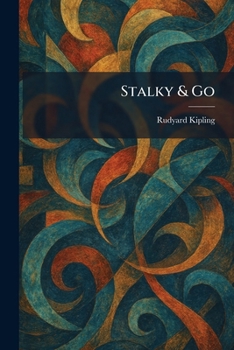
Stalky & Go

"Stalky & Co." is a seminal collection of interconnected stories by the Nobel Prize-winning author Rudyard Kipling, offering a sharp and unsentimental look at life within a British boarding school. Set at the United Services College, the narrative follows the clever and subversive exploits of three boys-Stalky, Beetle, and M'Turk-who navigate the rigid hierarchies and disciplinary codes of Victorian education with wit, defiance, and a unique moral code of their own.
Unlike the moralistic school stories typical of the era, Kipling's work presents a more rugged and realistic portrayal of adolescent camaraderie and the preparation of young men for service in the British Empire. The trio's escapades against overbearing masters and pompous peers serve as both a comedic celebration of schoolboy mischief and a sophisticated commentary on authority and leadership. Through the character of Beetle, widely considered to be a self-portrait of the author, Kipling explores themes of literary ambition and the formative power of brotherhood.
A classic of English literature, "Stalky & Co." remains a vital exploration of the boarding school genre, blending satire with a profound understanding of the bonds forged in youth. Its portrayal of rebellion and loyalty continues to resonate with readers interested in the social history and literary traditions of the late 19th and early 20th centuries.
This work has been selected by scholars as being culturally important, and is part of the knowledge base of civilization as we know it. This work was reproduced from the original artifact, and remains as true to the original work as possible. Therefore, you may see the original copyright references, library stamps (as most of these works have been housed in our most important libraries around the world), and other notations in the work.
This work is in the public domain in the United States of America, and possibly other nations. Within the United States, you may freely copy and distribute this work, as no entity (individual or corporate) has a copyright on the body of the work.
As a reproduction of a historical artifact, this work may contain missing or blurred pages, poor pictures, errant marks, etc. Scholars believe, and we concur, that this work is important enough to be preserved, reproduced, and made generally available to the public. We appreciate your support of the preservation process, and thank you for being an important part of keeping this knowledge alive and relevant.
Customer Reviews
ThriftBooks ® and the ThriftBooks ® logo are registered trademarks of Thrift Books Global, LLC
