


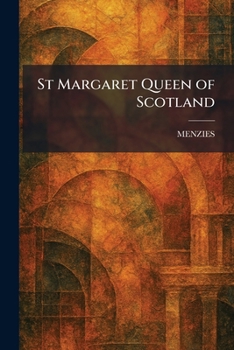
St Margaret Queen of Scotland

"St Margaret Queen of Scotland" offers a comprehensive and reverent examination of the life of one of the most influential women in British history. Born an English princess of the House of Wessex, Margaret ascended to the Scottish throne through her marriage to King Malcolm III, bringing with her a profound sense of religious devotion and cultural refinement that would reshape her adopted nation.
The narrative explores Margaret's pivotal role in the ecclesiastical and social reforms of the 11th century. As a devout Christian, she was instrumental in aligning the practices of the Scottish Church with the broader Roman traditions, establishing monasteries, and tirelessly advocating for the poor and marginalized. Her legacy is not merely one of royal administration, but of a deep spiritual commitment that eventually led to her canonization as a saint.
This work provides an insightful look into the medieval court, detailing the interpersonal dynamics of the royal family and the broader political landscape of the era. By focusing on her character as both a mother to future kings and a formidable public figure, the book highlights why Margaret remains a central symbol of Scottish identity and piety. It is an essential read for those interested in Scottish history, medieval hagiography, and the enduring power of faith in leadership.
This work has been selected by scholars as being culturally important, and is part of the knowledge base of civilization as we know it. This work was reproduced from the original artifact, and remains as true to the original work as possible. Therefore, you may see the original copyright references, library stamps (as most of these works have been housed in our most important libraries around the world), and other notations in the work.
This work is in the public domain in the United States of America, and possibly other nations. Within the United States, you may freely copy and distribute this work, as no entity (individual or corporate) has a copyright on the body of the work.
As a reproduction of a historical artifact, this work may contain missing or blurred pages, poor pictures, errant marks, etc. Scholars believe, and we concur, that this work is important enough to be preserved, reproduced, and made generally available to the public. We appreciate your support of the preservation process, and thank you for being an important part of keeping this knowledge alive and relevant.
Customer Reviews
ThriftBooks ® and the ThriftBooks ® logo are registered trademarks of Thrift Books Global, LLC
