


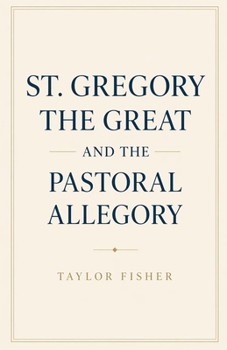
St. Gregory the Great and the Pastoral Allegory

The figure of St. Gregory the Great stands at a unique crossroads in the history of the Church, where the fading light of the ancient world met the uncertain dawn of medieval Christendom. Few men have carried the weight of such a transition with the serenity, depth, and supernatural clarity that Gregory displayed. His papacy, beginning in 590 and lasting until his death in 604, unfolded amid plague, famine, political collapse, and the constant threat of invasion. Yet from this crucible emerged not merely a competent administrator or a resilient leader, but one of the most luminous Doctors of the Church, whose writings shaped the spiritual imagination of the West for more than a millennium. Among his many contributions, his use of pastoral allegory-woven through his Moralia in Job, his Pastoral Rule, his homilies, and his letters-stands as a distinctive hallmark of his theological vision. It is this theme, the fusion of pastoral care and allegorical interpretation, that this book seeks to explore in depth.
Customer Reviews
ThriftBooks ® and the ThriftBooks ® logo are registered trademarks of Thrift Books Global, LLC
