


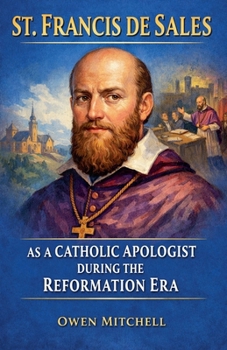
St. Francis de Sales as a Catholic Apologist During the Reformation Era

This book examines Francis de Sales's role as Catholic apologist within the context of the Protestant-Catholic controversy that dominated early modern Europe. It seeks to understand both the specific historical circumstances that shaped his apologetic work and the enduring principles that made his approach so effective. The study draws upon Francis's extensive writings, including his controversial works, his voluminous correspondence, and his spiritual treatises, as well as the testimony of contemporaries on both sides of the confessional divide. It situates Francis within the broader landscape of Counter-Reformation apologetics, examining how his method compared with that of other Catholic controversialists and how Protestant opponents responded to his arguments.
The book trace Francis's development as an apologist from his early formation through his missionary work in the Chablais to his mature controversial writings and his later emphasis on spiritual formation as a form of indirect apologetics. We examine the major doctrinal controversies of the period and Francis's specific contributions to each debate. We explore his distinctive method, characterized by gentleness, personal holiness, and the integration of apologetics with pastoral care. We consider the broader historical context, including the work of other Catholic apologists and the development of Protestant controversial theology.
Customer Reviews
ThriftBooks ® and the ThriftBooks ® logo are registered trademarks of Thrift Books Global, LLC
