


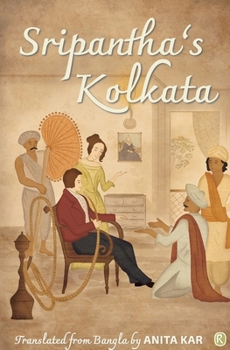
Sripantha's Kolkata

Sripantha was a raconteur extraordinaire. He eschews the dry academic approach of argument and statistics in favour of amusing anecdotes spiced with his teasing and playful wit. He expresses little rancour for past injustices - and any lack of academic rigour is more than compensated for by a style that transforms the reader into an onlooker - almost a participant. We understand the plight of Job Charnock in his struggle to establish a viable trading post in Bengal, and we are almost in attendance at the extravagant parties hosted by the Begum of Fairlie Place.
Sripantha writes engagingly about the lives of the babus and many outsiders - both indigenous and foreign - who came to Bengal with the intention of improving their livelihood. All contributed to the transformation of Calcutta from a small trading post into a metropolis. It was in this very place that India saw the birth of a new society and the sowing of seeds of freedom from colonial rule.
Starting with the founding of Calcutta in 1690, these twenty-two essays deal with many diverse episodes and conclude with that fateful day in 1911 when the city was decreed to no longer be the capital of British India.
Customer Reviews
ThriftBooks ® and the ThriftBooks ® logo are registered trademarks of Thrift Books Global, LLC
