


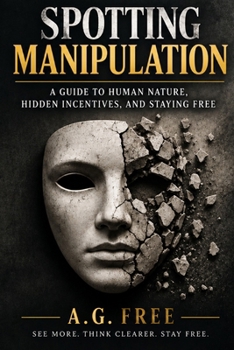
Spotting Manipulation: A Guide to Human Nature, Hidden Incentives, and Staying Free

People rarely do what they say they do for the reasons they give.
Why does someone insist they're only trying to help when they're really trying to control you? Why do intelligent people defend beliefs that work against their own interests? Why do families, companies, political movements, media organizations, and even entire societies behave in ways that seem irrational?
Because underneath the explanations are incentives.
Spotting Manipulation is a practical guide to seeing them.
Manipulation isn't limited to con artists, narcissists, salesmen, politicians, or villains plotting behind closed doors. Much of it isn't even conscious. People can sincerely believe their own explanations while insecurity, ego, fear, status, money, sex, belonging, resentment, or self-interest quietly pushes the machinery underneath.
Once you learn to look for that machinery, the world starts making a lot more sense.
Inside, you'll learn how to:
- Ask the simplest and most useful question in the book: Cui bono? - Who benefits?
- Recognize manipulation in relationships, families, workplaces, business, politics, media, and social media
- Separate what people say from the incentives shaping what they do
- Understand how identity and insecurity distort judgment
- Spot guilt, shame, fear, urgency, borrowed authority, and manufactured consensus
- Protect yourself financially, legally, socially, and psychologically
- Build optionality so walking away becomes a real choice
- Question other people's stories without automatically believing your own
This isn't a book about becoming paranoid.
It's about becoming harder to fool.
You don't need to assume everyone is lying. You don't need to see conspiracies everywhere. You don't need to stop trusting people.
You need to learn where to look.
Cui bono is a question. It isn't a verdict.
See the incentives. Find the mechanism. Understand the game.
And don't let the game become your life.
Customer Reviews
ThriftBooks ® and the ThriftBooks ® logo are registered trademarks of Thrift Books Global, LLC
