


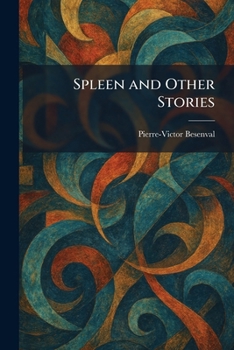
Spleen and Other Stories

Select Format
Select Condition 
Book Overview
"Spleen and Other Stories" offers a captivating window into the sophisticated and often cynical world of eighteenth-century French high society. Written by Pierre-Victor, Baron de Besenval, a prominent figure in the royal court, these tales blend wit, sharp social observation, and a unique exploration of the era's particular brand of melancholy. The collection showcases Besenval's talent for capturing the nuances of aristocratic life, exploring themes of romance, intrigue, and the quiet disillusionment that often lay beneath the glittering surface of the Ancien R gime.
Translated to bring these continental narratives to a wider audience, the work serves as a significant example of the libertine literary tradition and courtly storytelling. Readers are granted an intimate glimpse into the literary tastes and social mores of pre-revolutionary France, delivered with the insight of an insider who moved through the highest circles of power. From the title story's examination of fashionable boredom to the broader sketches of human nature, this collection remains a vital historical and literary document. "Spleen and Other Stories" is an essential read for those interested in the evolution of the short story and the rich cultural landscape of the Enlightenment era.
This work has been selected by scholars as being culturally important, and is part of the knowledge base of civilization as we know it. This work was reproduced from the original artifact, and remains as true to the original work as possible. Therefore, you may see the original copyright references, library stamps (as most of these works have been housed in our most important libraries around the world), and other notations in the work.
This work is in the public domain in the United States of America, and possibly other nations. Within the United States, you may freely copy and distribute this work, as no entity (individual or corporate) has a copyright on the body of the work.
As a reproduction of a historical artifact, this work may contain missing or blurred pages, poor pictures, errant marks, etc. Scholars believe, and we concur, that this work is important enough to be preserved, reproduced, and made generally available to the public. We appreciate your support of the preservation process, and thank you for being an important part of keeping this knowledge alive and relevant.
Customer Reviews
ThriftBooks ® and the ThriftBooks ® logo are registered trademarks of Thrift Books Global, LLC
