


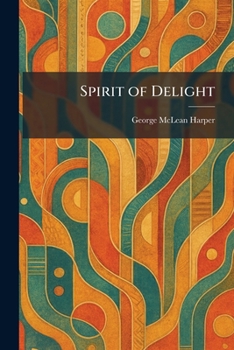
Spirit of Delight

"Spirit of Delight" is an evocative collection of literary essays that explores the profound joy and intellectual beauty found within the great works of Western literature. Written by the distinguished scholar George McLean Harper, this volume offers a series of insightful reflections on poets, novelists, and the enduring power of the written word. Harper, celebrated for his definitive work on Romanticism, brings his deep expertise and appreciative eye to a variety of subjects, ranging from the pastoral elegance of the English landscape to the complex moral dimensions of classic fiction.
The essays within "Spirit of Delight" examine the intersection of art and life, emphasizing the "delight" that arises from a true connection with literature. Readers will find thoughtful meditations on figures like William Wordsworth, Dante, and Samuel Taylor Coleridge, alongside broader discussions on the role of the critic and the value of liberal arts in society. Harper's prose is both elegant and accessible, making this collection a valuable resource for students of literature and general readers alike. By focusing on the spiritual and aesthetic rewards of reading, "Spirit of Delight" serves as a testament to the timeless relevance of literary exploration and the pursuit of humanistic excellence.
This work has been selected by scholars as being culturally important, and is part of the knowledge base of civilization as we know it. This work was reproduced from the original artifact, and remains as true to the original work as possible. Therefore, you may see the original copyright references, library stamps (as most of these works have been housed in our most important libraries around the world), and other notations in the work.
This work is in the public domain in the United States of America, and possibly other nations. Within the United States, you may freely copy and distribute this work, as no entity (individual or corporate) has a copyright on the body of the work.
As a reproduction of a historical artifact, this work may contain missing or blurred pages, poor pictures, errant marks, etc. Scholars believe, and we concur, that this work is important enough to be preserved, reproduced, and made generally available to the public. We appreciate your support of the preservation process, and thank you for being an important part of keeping this knowledge alive and relevant.
Customer Reviews
ThriftBooks ® and the ThriftBooks ® logo are registered trademarks of Thrift Books Global, LLC
