


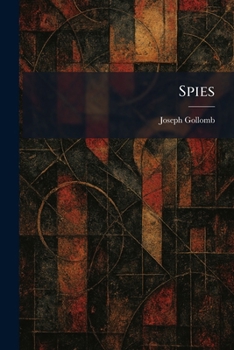
Spies

"Spies" is a compelling and narrative-driven exploration of the clandestine world of international espionage. Written by Joseph Gollomb during the interwar period, this work delves into the high-stakes lives and intricate operations of secret agents who operated behind the scenes of major historical events. The text provides an analytical yet gripping account of the methods, risks, and psychological pressures inherent in the life of a spy, drawing from the evolving landscape of intelligence work in the early 20th century.
The book examines the mechanics of information gathering and the strategic necessity of intelligence in both wartime and peace. Moving through the tension-filled years of the Great War and into the shifting political landscape of the 1920s, "Spies" captures the high stakes of global diplomacy and shadow warfare. It serves as a significant historical document, reflecting the public's enduring fascination with secret service operations and the growing complexity of national security during a transformative era in world history. Readers interested in military history, political intrigue, and the origins of modern intelligence will find this an insightful study of the silent war fought in the shadows.
This work has been selected by scholars as being culturally important, and is part of the knowledge base of civilization as we know it. This work was reproduced from the original artifact, and remains as true to the original work as possible. Therefore, you may see the original copyright references, library stamps (as most of these works have been housed in our most important libraries around the world), and other notations in the work.
This work is in the public domain in the United States of America, and possibly other nations. Within the United States, you may freely copy and distribute this work, as no entity (individual or corporate) has a copyright on the body of the work.
As a reproduction of a historical artifact, this work may contain missing or blurred pages, poor pictures, errant marks, etc. Scholars believe, and we concur, that this work is important enough to be preserved, reproduced, and made generally available to the public. We appreciate your support of the preservation process, and thank you for being an important part of keeping this knowledge alive and relevant.
Customer Reviews
ThriftBooks ® and the ThriftBooks ® logo are registered trademarks of Thrift Books Global, LLC
