


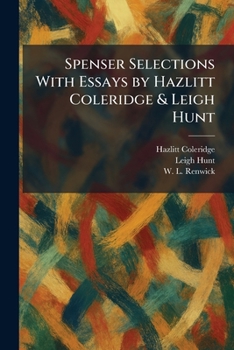
Spenser Selections With Essays by Hazlitt Coleridge & Leigh Hunt

"Spenser Selections With Essays by Hazlitt Coleridge & Leigh Hunt" provides a comprehensive introduction to the works of Edmund Spenser, one of the most influential figures of the Elizabethan era. This collection brings together representative excerpts from Spenser's poetic catalog, including his masterful epic "The Faerie Queene," alongside significant critical appraisals from the nineteenth century's most renowned literary thinkers: William Hazlitt, Samuel Taylor Coleridge, and Leigh Hunt.
The volume is designed to illuminate Spenser's unique contribution to English letters, often referred to as "the poet's poet" due to his lush imagery and innovative metrical structures. By pairing the primary texts with essays from the Romantic period, the work offers a dual perspective: the aesthetic beauty of the original Renaissance verse and the enduring impact it had on subsequent generations of writers. Edited with scholarly care by W. L. Renwick, this selection serves as both a gateway for new readers of Spenser and a valuable resource for those interested in the history of literary criticism. It captures the essence of a poet whose work defined the English Renaissance, framed by the insightful analysis of the critics who helped cement his legacy in the canon of world literature.
This work has been selected by scholars as being culturally important, and is part of the knowledge base of civilization as we know it. This work was reproduced from the original artifact, and remains as true to the original work as possible. Therefore, you may see the original copyright references, library stamps (as most of these works have been housed in our most important libraries around the world), and other notations in the work.
This work is in the public domain in the United States of America, and possibly other nations. Within the United States, you may freely copy and distribute this work, as no entity (individual or corporate) has a copyright on the body of the work.
As a reproduction of a historical artifact, this work may contain missing or blurred pages, poor pictures, errant marks, etc. Scholars believe, and we concur, that this work is important enough to be preserved, reproduced, and made generally available to the public. We appreciate your support of the preservation process, and thank you for being an important part of keeping this knowledge alive and relevant.
Customer Reviews
ThriftBooks ® and the ThriftBooks ® logo are registered trademarks of Thrift Books Global, LLC
