


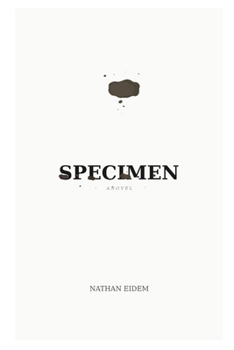
Specimen
No Customer Reviews

SPECIMEN
A soil sample arrives at a federal research annex from a demolished elementary school. Routine contamination screening. The kind of work June Park has done for four years - prepare the sample, run the machines, record the output, let the scientists decide what it means. But something in the Sabouraud plate is wrong. Not in a way she can name. In a way she can feel.
The colony grows too fast. Its structure shifts under observation. The instruments begin to disagree with each other, then with themselves. The computational biologist's models become predictive - then too predictive. The principal investigator stops speaking and starts drawing geometries that the electron microscope later confirms. The other lab technician stops coming to work. He's in his garden. He's been digging. And the archived samples tell the worst story of all: the organism isn't new. It's been in the ground for decades. For centuries. What's new is that someone finally looked at it correctly.
June is the last one still filing coherent reports. Not because she's immune - because she doesn't try to understand what she sees. She is the space between the specimen and the interpretation. The hands that operate machines. The eyes that look without knowing. But proximity has a weight. And knowledge, it turns out, doesn't require permission.
Specimen is a novel about the horror of comprehension - what happens when the act of understanding becomes the thing you cannot survive.
A soil sample arrives at a federal research annex from a demolished elementary school. Routine contamination screening. The kind of work June Park has done for four years - prepare the sample, run the machines, record the output, let the scientists decide what it means. But something in the Sabouraud plate is wrong. Not in a way she can name. In a way she can feel.
The colony grows too fast. Its structure shifts under observation. The instruments begin to disagree with each other, then with themselves. The computational biologist's models become predictive - then too predictive. The principal investigator stops speaking and starts drawing geometries that the electron microscope later confirms. The other lab technician stops coming to work. He's in his garden. He's been digging. And the archived samples tell the worst story of all: the organism isn't new. It's been in the ground for decades. For centuries. What's new is that someone finally looked at it correctly.
June is the last one still filing coherent reports. Not because she's immune - because she doesn't try to understand what she sees. She is the space between the specimen and the interpretation. The hands that operate machines. The eyes that look without knowing. But proximity has a weight. And knowledge, it turns out, doesn't require permission.
Specimen is a novel about the horror of comprehension - what happens when the act of understanding becomes the thing you cannot survive.
Format:Paperback
Language:English
ISBN:B0GQSC4GF6
ISBN13:9798250199407
Release Date:February 2026
Publisher:Independently Published
Length:130 Pages
Weight:0.40 lbs.
Dimensions:0.3" x 6.0" x 9.0"
Customer Reviews
0 rating
Copyright © 2026 Thriftbooks.com
Terms of Use | Privacy Policy | Do Not Sell/Share My Personal Information | Cookie Policy | Cookie Preferences | Accessibility Statement
ThriftBooks ® and the ThriftBooks ® logo are registered trademarks of Thrift Books Global, LLC
ThriftBooks ® and the ThriftBooks ® logo are registered trademarks of Thrift Books Global, LLC
