


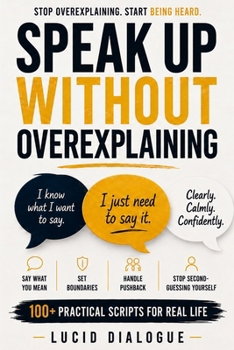
Speak Up Without Overexplaining

You can't make Saturday. That's the whole message. So why has it taken twenty-two minutes, two apologies, and an excuse that isn't even true?
You usually know what you want to say. The trouble starts when it's time to say it. You add a reason, then another, then an apology for the reasons. Someone pushes back, and the no you started with turns into a maybe.
Speak Up Without Overexplaining is a practical guide to saying the first clear sentence and letting it stand. It's for people-pleasers, chronic apologizers, and anyone who rehearses conversations in the shower and replays them at 1 a.m.
Most communication advice stops at the first line. This book keeps going: to the pause after you've said it, the "Why?" that follows, and what to say the second and third time someone pushes.
Inside, you'll learn how to:
Say no in a sentence or two, without inventing an excuseHold a boundary when someone argues, guilt-trips you, or asks "Why?"Stop apologizing for things that aren't your fault, and apologize well when they areAsk for what you want, from help at home to a raise, and then stop talkingDisagree without turning it into a fightSpeak up at work about deadlines, workload, and your own winsStay steady when someone gets defensive, angry, tearful, or goes quietWrite texts and emails that say what you mean the first timeStop replaying conversations long after they're overYou'll also get:
The CLEAR framework for building a clear answer, with a pocket version for when you're put on the spot300+ ready-to-use scripts, organized by situation, from turning down a favor to asking for a raiseA 30-Day Speak-Up Challenge, one small exercise a dayAn Emergency Short List for the moments when there's no time to thinkGrounded in published research and built around realistic stories, it's written for the places these conversations actually happen: the group chat, the family dinner, the meeting where you finally say the thing.
You don't need to be louder, colder, or tougher. You need fewer words, said clearly.
Say what you mean. Then stop.
Customer Reviews
ThriftBooks ® and the ThriftBooks ® logo are registered trademarks of Thrift Books Global, LLC
