


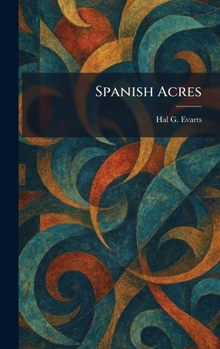
Spanish Acres

"Spanish Acres" is a compelling Western novel by Hal G. Evarts that transports readers to the rugged landscapes of the American Southwest during a period of transition and conflict. The narrative revolves around the intense struggle for control over the vast and valuable territory known as the Spanish Acres, where ancient land grant legacies clash with the relentless ambitions of the modern frontier.
Through vivid prose and authentic detail, Evarts explores the complexities of ranching life and the legal intricacies of land ownership. The story follows a cast of resilient characters navigating a world defined by its harsh beauty and demanding code of ethics. As tensions mount and the threat of greed looms over the heritage of the land, the protagonist must confront both physical dangers and systemic corruption to secure justice.
Capturing the essence of the classic Western genre, "Spanish Acres" offers a rich exploration of themes such as perseverance, the spirit of the pioneer, and the deep-seated connection between people and the land. Hal G. Evarts demonstrates his mastery of the genre, providing a historical perspective on the shifting social and economic structures of the early 20th-century West.
This work has been selected by scholars as being culturally important, and is part of the knowledge base of civilization as we know it. This work was reproduced from the original artifact, and remains as true to the original work as possible. Therefore, you may see the original copyright references, library stamps (as most of these works have been housed in our most important libraries around the world), and other notations in the work.
This work is in the public domain in the United States of America, and possibly other nations. Within the United States, you may freely copy and distribute this work, as no entity (individual or corporate) has a copyright on the body of the work.
As a reproduction of a historical artifact, this work may contain missing or blurred pages, poor pictures, errant marks, etc. Scholars believe, and we concur, that this work is important enough to be preserved, reproduced, and made generally available to the public. We appreciate your support of the preservation process, and thank you for being an important part of keeping this knowledge alive and relevant.
Customer Reviews
ThriftBooks ® and the ThriftBooks ® logo are registered trademarks of Thrift Books Global, LLC
