


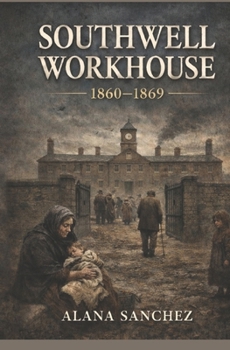
Southwell Workhouse: 1860-1869

Southwell Workhouse: 1860-1869 is a forensic examination of a Victorian institution at the height of its administrative maturity. This third volume in the Southwell Workhouse series traces a decade not of scandal or collapse, but of consolidation-when the Poor Law learned how to absorb reform, satisfy scrutiny, and endure without becoming humane.
Drawing exclusively on documentary evidence, this study follows the daily mechanics of control: classification, labour, diet, punishment, inspection, and record-keeping. The workhouse of the 1860s was cleaner, more efficient, and more professionally managed than its predecessors-yet it remained a system designed to deter dependence through regulated hardship. Improvements did not dismantle cruelty; they refined it.
Written without fictionalisation or sentimentality, this volume reveals how institutional power survives by adapting its form while preserving its function. It is not a story of progress or decline, but of durability-of a system that learned to justify suffering through procedure, statistics, and necessity.
Customer Reviews
ThriftBooks ® and the ThriftBooks ® logo are registered trademarks of Thrift Books Global, LLC
