


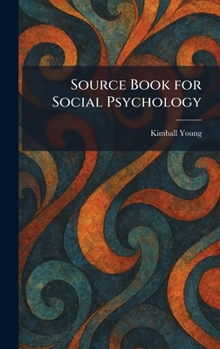
Source Book for Social Psychology

"Source Book for Social Psychology" is a comprehensive collection of foundational readings and analyses that defined the field of social psychology during its formative years. Compiled by the influential sociologist and psychologist Kimball Young, this work provides an exhaustive overview of the psychological mechanisms underlying human social behavior.
The text explores a wide range of topics, including the influence of culture on the individual, the dynamics of group interaction, and the development of social personality. By synthesizing diverse perspectives from psychology, sociology, and anthropology, the book offers a rigorous examination of how social environments shape human thought and action. It addresses key concepts such as collective behavior, public opinion, social control, and the role of leadership in society.
This volume serves as an essential resource for understanding the historical development of social psychological theory and remains a significant academic reference for those interested in the complexities of human association and the scientific study of social life. Through its curated selection of materials, it captures the intellectual rigor and interdisciplinary nature of early 20th-century social science.
This work has been selected by scholars as being culturally important, and is part of the knowledge base of civilization as we know it. This work was reproduced from the original artifact, and remains as true to the original work as possible. Therefore, you may see the original copyright references, library stamps (as most of these works have been housed in our most important libraries around the world), and other notations in the work.
This work is in the public domain in the United States of America, and possibly other nations. Within the United States, you may freely copy and distribute this work, as no entity (individual or corporate) has a copyright on the body of the work.
As a reproduction of a historical artifact, this work may contain missing or blurred pages, poor pictures, errant marks, etc. Scholars believe, and we concur, that this work is important enough to be preserved, reproduced, and made generally available to the public. We appreciate your support of the preservation process, and thank you for being an important part of keeping this knowledge alive and relevant.
Customer Reviews
ThriftBooks ® and the ThriftBooks ® logo are registered trademarks of Thrift Books Global, LLC
