


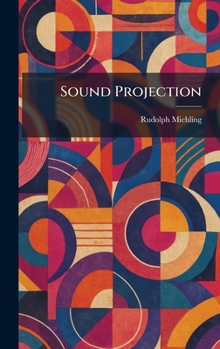
Sound Projection

The book covers a broad range of topics critical to the 1929-era projectionist, including the mechanics of sound-on-film technology, the operation of vacuum tube amplifiers, and the acoustics of large theater spaces. Rudolph Miehling meticulously explains the intricacies of sound synchronization, offering practical solutions for maintaining audio clarity and preventing technical failures during screenings.
As a historical document, "Sound Projection" captures the excitement and technical rigor of a period when the "talkies" were redefining global entertainment. It remains a significant resource for those interested in the history of film technology, the development of audio engineering, and the golden age of movie theaters. By documenting the standards and innovations of the time, the work highlights the ingenuity required to bring the dimension of sound to the cinematic experience.
This work has been selected by scholars as being culturally important, and is part of the knowledge base of civilization as we know it. This work was reproduced from the original artifact, and remains as true to the original work as possible. Therefore, you may see the original copyright references, library stamps (as most of these works have been housed in our most important libraries around the world), and other notations in the work.
This work is in the public domain in the United States of America, and possibly other nations. Within the United States, you may freely copy and distribute this work, as no entity (individual or corporate) has a copyright on the body of the work.
As a reproduction of a historical artifact, this work may contain missing or blurred pages, poor pictures, errant marks, etc. Scholars believe, and we concur, that this work is important enough to be preserved, reproduced, and made generally available to the public. We appreciate your support of the preservation process, and thank you for being an important part of keeping this knowledge alive and relevant.
Customer Reviews
ThriftBooks ® and the ThriftBooks ® logo are registered trademarks of Thrift Books Global, LLC
