


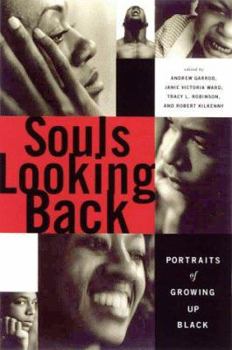
Souls Looking Back: Life Stories of Growing Up Black

Select Format
Select Condition 
Book Overview
Most of what is written these days about young black men and women emphasizes incarceration and mortality rates, teen pregnancy, drug use, and domestic strife. This collection of sixteen autobiographical essays by African-Americans, Africans in America, Afro-Caribbean and biracial college students who have tackled significant obstacles to achieve success and degrees of self-understanding offers a broader, more hopeful portrait of the adolescent experiences of minority youth. Here are emotionally honest and reflective stories of economic hardship, racial bias, loneliness, and anger--but also of positive role models, spiritual awakening, perseverance, and racial pride. In these essays, students explore the process of self-discovery and the realization of cultural identity. The pieces are accompanied by commentary from prominent African-American scholars, such as Jewelle Taylor Gibbs and Peter C. Murrell, Jr. Together they create a vivid portrait of what it is like to grow up as a black person in America, and offer a springboard to current debates about self-discovery, cultural identity and assimilation. Often raw and painful, always honest and affecting, this collection of personal stories written by young people stands as an eloquent tribute to the courage of today's youth and to the power of their own words.
Format:Paperback
Language:English
ISBN:0415920620
ISBN13:9780415920629
Release Date:May 1999
Publisher:Routledge
Length:326 Pages
Weight:1.00 lbs.
Dimensions:0.7" x 6.0" x 8.9"
Customer Reviews
4 ratings
Life stories
Published by Thriftbooks.com User , 24 years ago
A collection of essays wrote by african american and biracal young adults. The essays are about struggles the writers have been through while growing up, and on college campues. I throught all the essays were good.
A wonder sociological study
Published by Thriftbooks.com User , 25 years ago
This book is a very well-done sociological study of African American/bi-racial college students and the telling of their stories to get to this point in their lives. The stories are diverse yet similar. Bright, misunderstood, sticking out like sore thumbs because they were of color and intelligent. That is not the way it is supposed to be. Why is it African Americans are ridiculed for being smart. I read Kunjufu's book some years ago when my daughter was in middle school, Black Peer Pressure: To be Popular or Smart. Why must you choose. I am trying to remember my childhood experiences. I cannot remember being ridiculed for doing well in school. It seemed that was the norm for my group and the kids seem to have more respect for one another. I know this is unusual. I think about my brother who is now a well-known cardiologist in the Bay Area and when I look back on it, he must have felt isolated because he was one of those super-smart, gifted students. From the first story of Prince which was heart-wrenching. He was truly a testament to the poverty and hardship. He proved he could succeed against the oods. So, it is with Malik who had a drug-addicted mother. These young men's stories is in contrast to some of the more affluent of the group. Maria, Rob, and Steve had all of the amenities to have a good head start, well-eduacated, financially secure, and good neighborhoods. However I must say, I was disappointed that these students felt they had little in common with other black students because of their status. And it seemed their attitudes were reinforced by their parents attitudes who seemed to feel if it's white, its right. I am trying to reconcile these parents with the generation that had to strive for basic civil rights in housing and education. Where was the pride in being black. Why were they not going to black churches and putting their children in contact with other young black people with groups such as Jack and Jill or church youth groups? I always thought it was the generation these students that lost the black pride, not their parents who I guess are in their forties, fifties, and sixties. Claudio and Alessandro had to do with the problem of being both black and Latino and all the trials associated with being of a double culture. So often in Latin cultures, children are told they are Latino and then they get out into the world where no one will let them forget they are black. That can be a rude awakening when culture and color clash. The bi-racial students angst of being between two world, not knowing where they belong. This story was also very well told in "Black, White,Other" by Lise Funderburg. Christina and Susanna's black fathers evidently had problems with their black identities. It seems in these and many bi-racial families they do no discuss race, as if not talking about it, it won't be a problem. But as they find out, these issues need to be discussed. Sure these kind of parents say they just want
Engaging and Critical Personal Narratives
Published by Thriftbooks.com User , 26 years ago
Souls Looking Back is a thought-provoking, engaging and critical work that solidifies the validity of personal narrative as form of interpretive research with a focus on critical race theory. Anyone who may posses any questions regarding the power of such representation should read, ingest and reflect upon the stories of the young people presented in this book. The editors splendedly synthesized these educational and personal memoirs within the context of personal identity, critical race, critical feminist and critical race feminist perspectives. I would strongly recommend this book for all those with sincere interests in anthropology, sociology, psychology, African-American/African-Carribean/Afro-British studies, and education. This book truly exemplifies the multiplicity of lives our young people of color experience.
A Great Addition to the Scholarship on Adolescents
Published by Thriftbooks.com User , 26 years ago
Continuing in the vain of his other great collection of autobiographical collections ("Adolescent Portraits", "First Person, First People", "Crossing Customs"), Andrew Garrod, as lead editor, has provided a collection of thought-provoking autobiographies that capture the joys and strains of the adolescent black. These autobiographical essays show tremendous insight, wisdom, reflection and brutal honesty of black adolescents in the 1990's. It is obvious that Garrod, et al. worked quite hard to encourage their contributors and to present such a compelling piece of scholarship and glimpse into the adolescent world. Not many authors have been able to capture the collegiate voice of Blacks, Native-Americans, Internationals and Caucasians quite like Andrew Garrod and his collaborators. The scholarship and rich analysis between chapters and essays pull out much that can and should lead to fruitful class discussions. This book, and the other Garrod-edited books, are MUST reads for researchers, teachers and scholars interested in the diverse adolescent mind. Whether you are from an education psychology, moral development, adolescent development, anthropology or psychology bent (or just interested in reading about reflective young adults who have overcome great barriers), Andrew Garrod, et al. has presented, once again, a text to more than satisfy every interests and needs. I can't rave enough about this book and the others published by Garrod and his collaborators. Adolescent scholarship in America, through the autobiographical data collection method, has grealy advanced through the publishing of these texts. The publishers, authors and editors should be very proud of their great addition to society!
Copyright © 2026 Thriftbooks.com Terms of Use
| Privacy Policy | Do Not
Sell/Share My Personal Information | Cookie Policy | Cookie Preferences | Accessibility Statement
ThriftBooks® and the ThriftBooks® logo are registered trademarks of Thrift Books Global, LLC
ThriftBooks® and the ThriftBooks® logo are registered trademarks of Thrift Books Global, LLC
