


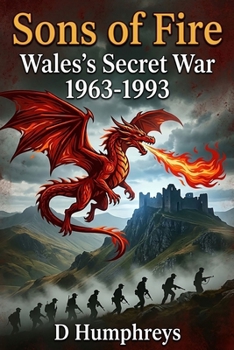
Sons of Fire: Wales's Secret War 1963-1993

Between 1963 and 1993, three movements waged a sustained campaign of resistance against the British state - not in parliament, not through petition, but with explosives in the Snowdonian uplands, fires in the hills of Gwynedd, and the absolute conviction of men and women who believed their country was being erased.
Sons of Fire is the first full narrative history of Welsh militant nationalism - told with equal impartiality, without romanticisation or condemnation, and with the rigour the subject has long deserved.
Three movements. Three decades. One argument.Mudiad Amddiffyn Cymru (MAC) - the underground bombing organisation that struck water pipelines, government offices and investiture infrastructure across a decade without a single arrest attributable to police workThe Free Wales Army - whose uniformed militancy made Welsh resistance visible to the world, and whose fifty-three-day trial concluded on the very day of the 1969 investitureMeibion Glyndŵr - the Sons of Glyndŵr - whose fourteen-year arson campaign against English holiday homes became the longest sustained domestic insurgency in post-war British historyAt the heart of the story: John Jenkins.Army sergeant. Dental technician. The most effective clandestine operator Britain has ever produced on its own soil. Jenkins rebuilt MAC from the ground up, ran a five-year bombing campaign governed by an absolute prohibition on casualties, and went to prison with the same moral seriousness with which he had built the organisation. He died in December 2020, aged eighty-seven, largely unknown outside Wales.
From Tryweryn to the Senedd.From the drowning of Capel Celyn - opposed by every Welsh MP and ignored by Westminster - to the 6,721-vote margin of the 1997 devolution referendum, Sons of Fire traces the long argument Wales made about its own existence, and what it was prepared to do to be heard.
Drawing on participant testimony, court records, and the primary scholarship of Dr Wyn ThomasCovers all three movements with equal weight and strict impartialityIncludes a full chronology, principal figures, note on the Welsh language, and select bibliographyEssential reading for anyone interested in Welsh history, political violence, nationalism, and the road to devolutionCofiwch Dryweryn. Remember Tryweryn. The wall still stands.
Customer Reviews
ThriftBooks ® and the ThriftBooks ® logo are registered trademarks of Thrift Books Global, LLC
