


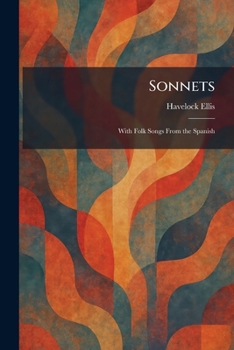
Sonnets: With Folk Songs From the Spanish

"Sonnets, With Folk Songs From the Spanish" is a significant collection of verse that highlights the literary sensitivity and scholarly reach of Havelock Ellis. While Ellis is primarily remembered for his groundbreaking contributions to the social sciences, this work reveals his profound talent as a poet and a dedicated translator of Mediterranean traditions. The volume is structured in two parts: a selection of original sonnets followed by evocative translations of traditional Spanish folk songs.
The original sonnets explore universal themes of nature, intellectual pursuit, and the complexities of human emotion with formal precision. In the latter half of the collection, Ellis captures the rhythmic beauty and emotional directness of the Spanish "copla" and other folk forms, bridging the gap between English literary sensibilities and the vibrant oral heritage of Spain. This work serves as a testament to the artistic versatility of one of the early 20th century's most influential thinkers, offering readers a unique blend of personal reflection and cross-cultural exploration. It remains a valuable resource for those interested in the history of poetic translation and the intersection of British and Spanish literary cultures.
This work has been selected by scholars as being culturally important, and is part of the knowledge base of civilization as we know it. This work was reproduced from the original artifact, and remains as true to the original work as possible. Therefore, you may see the original copyright references, library stamps (as most of these works have been housed in our most important libraries around the world), and other notations in the work.
This work is in the public domain in the United States of America, and possibly other nations. Within the United States, you may freely copy and distribute this work, as no entity (individual or corporate) has a copyright on the body of the work.
As a reproduction of a historical artifact, this work may contain missing or blurred pages, poor pictures, errant marks, etc. Scholars believe, and we concur, that this work is important enough to be preserved, reproduced, and made generally available to the public. We appreciate your support of the preservation process, and thank you for being an important part of keeping this knowledge alive and relevant.
Related Subjects
PoetryCustomer Reviews
ThriftBooks ® and the ThriftBooks ® logo are registered trademarks of Thrift Books Global, LLC
