


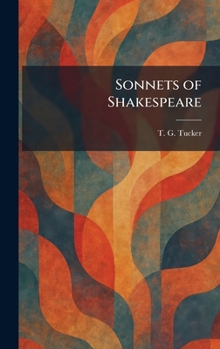
Sonnets of Shakespeare

"Sonnets of Shakespeare" presents one of the most celebrated collections of lyric poetry in the English language, accompanied by the scholarly insights of T. G. Tucker. Comprising 154 poems, the sonnets explore universal themes of love, time, beauty, and mortality, addressing both the mysterious Fair Youth and the enigmatic Dark Lady. This edition provides a meticulous examination of the text, offering readers a deeper understanding of the linguistic nuances and historical context of William Shakespeare's verse.
Tucker's commentary aims to clarify the complexities of the Elizabethan idiom, providing explanatory notes that illuminate the poet's intricate imagery and philosophical musings. As a cornerstone of the Western literary canon, the sonnets remain unparalleled in their emotional depth and technical mastery. Whether studied for their formal structure or their profound exploration of the human condition, these poems continue to resonate with readers and scholars alike. This volume serves as an essential resource for those seeking to appreciate the enduring brilliance and lyrical power of Shakespeare's poetic legacy.
This work has been selected by scholars as being culturally important, and is part of the knowledge base of civilization as we know it. This work was reproduced from the original artifact, and remains as true to the original work as possible. Therefore, you may see the original copyright references, library stamps (as most of these works have been housed in our most important libraries around the world), and other notations in the work.
This work is in the public domain in the United States of America, and possibly other nations. Within the United States, you may freely copy and distribute this work, as no entity (individual or corporate) has a copyright on the body of the work.
As a reproduction of a historical artifact, this work may contain missing or blurred pages, poor pictures, errant marks, etc. Scholars believe, and we concur, that this work is important enough to be preserved, reproduced, and made generally available to the public. We appreciate your support of the preservation process, and thank you for being an important part of keeping this knowledge alive and relevant.
Customer Reviews
ThriftBooks ® and the ThriftBooks ® logo are registered trademarks of Thrift Books Global, LLC
