


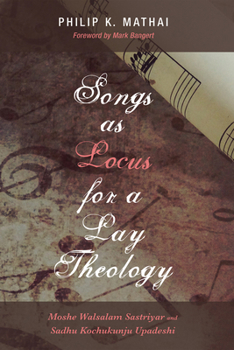
Songs as Locus for a Lay Theology: Moshe Walsalam Sastriyar and Sadhu Kochukunju Upadeshi
No Customer Reviews

Select Format
Select Condition 
Book Overview
Hymns and songs have long been the most frequent and characteristic expression of communal beliefs, particularly among faith traditions that lack authoritarian or rigidly codified doctrinal statements. Even among Christian traditions that do include a strong focus on creeds, catechism and liturgy, it is hymnody, more than anything else, that sustains their lay theology. The hymns of Moshe Walsalam Sastriyar (1847-1916) and Sadhu Kochukunju Upadeshi (1883-1945)--both from the Kingdom of Travancore in southwest India--transcend denominational boundaries and have been embraced far beyond their historical communities of origin as a means of articulating faith and spirituality. Against a missionizing backdrop of western-dominated hymnody and theology, these songs and writings from the fringes of colonialism were embraced by local communities and became their chosen expression of faith. As such, they evoked a lay consciousness quite distinct from official theologies of the church. In Walsalam and Kochukunju, along with other Christian writers of their period and culture, we see a unique inter-weaving of local traditions and the global Christian message--one that transformed social and spiritual relationships for individuals and their communities alike.
Format:Paperback
Language:English
ISBN:1625645503
ISBN13:9781625645500
Release Date:February 2019
Publisher:Pickwick Publications
Length:202 Pages
Weight:0.61 lbs.
Dimensions:0.4" x 6.0" x 9.0"
Customer Reviews
0 rating
Copyright © 2026 Thriftbooks.com Terms of Use
| Privacy Policy | Do Not
Sell/Share My Personal Information | Cookie Policy | Cookie Preferences | Accessibility Statement
ThriftBooks® and the ThriftBooks® logo are registered trademarks of Thrift Books Global, LLC
ThriftBooks® and the ThriftBooks® logo are registered trademarks of Thrift Books Global, LLC
