


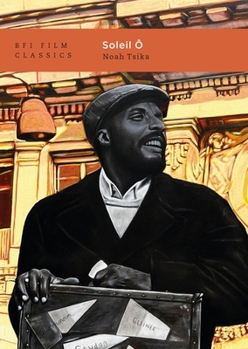
Soleil Ô
No Customer Reviews

Med Hondo's debut feature, Soleil (1970), follows an unnamed African immigrant as he travels to Paris in search of work and a better life. Instead, he faces unemployment, exploitation and a deep sense of isolation from French society. Told through a non-linear structure and blending surrealist and satirical elements, the film is a searing critique of racism and the broader legacies of colonialism.
Noah Tsika's study situates Soleil within its historical and political contexts, as well as within Hondo's broader career and lifelong commitment to anti-colonial principles. He considers the film's depiction of the modern exilic experience as a cinematic response to anti-immigrant rhetoric and nativist sentiment in France. Tsika also traces the film's lengthy five-year production, examining Hondo's guerrilla film-making tactics through which he staged scripted scenes on the teeming streets of Paris and captured the immediate reactions of perplexed passers-by. In doing so, Tsika suggests that by using the devices of documentary to tell a fictional story, and the devices of fiction to document a precise, seismic moment in world history, Soleil daringly extends the techniques of film-makers such as Paulin Soumanou Vieyra and Ousmane Sembene into narrative, thematic and political terrain not previously encountered in African cinemas.Format:Paperback
Language:English
ISBN:1839029595
ISBN13:9781839029592
Release Date:September 2026
Publisher:British Film Institute
Length:104 Pages
Weight:1.11 lbs.
Dimensions:1.1" x 5.3" x 7.5"
Customer Reviews
0 rating
Copyright © 2026 Thriftbooks.com Terms of Use
| Privacy Policy | Do Not
Sell/Share My Personal Information | Cookie Policy | Cookie Preferences | Accessibility Statement
ThriftBooks® and the ThriftBooks® logo are registered trademarks of Thrift Books Global, LLC
ThriftBooks® and the ThriftBooks® logo are registered trademarks of Thrift Books Global, LLC
