


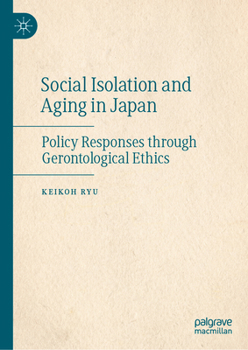
Social Isolation and Aging in Japan: Policy Responses Through Gerontological Ethics

This book confronts one of the defining challenges of super-aged societies: the surging number of older adults living alone in Japan, the global leader in population aging. It delivers a rigorous, data-driven exploration of why solitary senior living is accelerating, how social isolation takes root, and what actionable policies can foster inclusion. Blending sociology, gerontology, ethics, and comparative policy analysis, it unpacks the intertwined forces fueling Japan's loneliness crisis--demographic shifts, eroding traditional family structures, evolving cultural values, economic strain, and the psychology of active and passive isolation. Using large-scale quantitative data, logistic regression, and grounded-theory interviews, the study reveals how loneliness, financial stress, and declining health create a vicious cycle that undermines senior well-being. Beyond diagnosis, it evaluates Japan's long-term care systems and anti-isolation policies, pinpointing successes and critical gaps. A pivotal comparison with China illuminates why some policy strategies transfer seamlessly while others falter without cultural and ethical adaptation. For researchers, policymakers, social welfare practitioners, and anyone invested in the future of aging societies, this book offers a comprehensive framework, cross-national lessons, and actionable recommendations to reframe aging as an ethical imperative--one that prioritizes dignity, autonomy, and inclusion for all solitary seniors.
Customer Reviews
ThriftBooks® and the ThriftBooks® logo are registered trademarks of Thrift Books Global, LLC
