


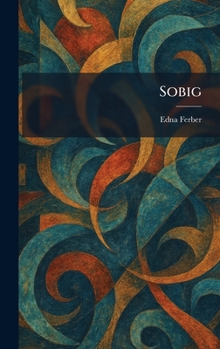
Sobig

"So Big" is a Pulitzer Prize-winning masterpiece that explores the indomitable human spirit through the life of Selina Peake DeJong. After the death of her father, Selina finds herself in a harsh Dutch farming community outside Chicago, where she eventually marries a hard-working farmer. Following his death, she is left to manage the truck farm alone and raise her son, Dirk, whom she affectionately nicknames "So Big."
The narrative provides a stunning contrast between Selina's unwavering appreciation for beauty and art and the practical, often soul-crushing demands of rural survival. As Dirk grows and moves into the high-society circles of Chicago, the story delves into deep themes of ambition, materialism, and the varying ways success is measured in American life. Edna Ferber's masterful prose captures both the rugged landscape of the American Midwest and the intricate emotional bond between mother and son.
Through its vivid characters and evocative setting, "So Big" remains a powerful meditation on integrity and the pursuit of a meaningful life. This work stands as a cornerstone of early 20th-century literature, offering an insightful portrayal of the immigrant experience, the challenges of single motherhood, and the complex relationship between generations.
This work has been selected by scholars as being culturally important, and is part of the knowledge base of civilization as we know it. This work was reproduced from the original artifact, and remains as true to the original work as possible. Therefore, you may see the original copyright references, library stamps (as most of these works have been housed in our most important libraries around the world), and other notations in the work.
This work is in the public domain in the United States of America, and possibly other nations. Within the United States, you may freely copy and distribute this work, as no entity (individual or corporate) has a copyright on the body of the work.
As a reproduction of a historical artifact, this work may contain missing or blurred pages, poor pictures, errant marks, etc. Scholars believe, and we concur, that this work is important enough to be preserved, reproduced, and made generally available to the public. We appreciate your support of the preservation process, and thank you for being an important part of keeping this knowledge alive and relevant.
Customer Reviews
ThriftBooks ® and the ThriftBooks ® logo are registered trademarks of Thrift Books Global, LLC
