


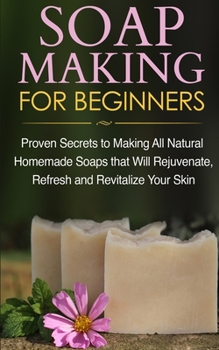
Soap Making for Beginners: Proven Secrets to Making All Natural Homemade Soaps that Will Rejuvenate, Refresh and Revitalize Your Skin

What makes this book different from other books available on this topic?
This book has a number of things that make it stand out from the crowd. Here are a few of the highlights:
Key Takeaways: This section allows you to briefly go back and summarize what this book is about at any time -- you don't have to re-read the entire book again. Resources List: This well researched list provides you with a number of further references and ideas if you'd like to continue looking into this subject. High-quality information and a professionally edited book
Why Would You Want to Make Your Own Soap?
Most soap available in stores today are not really soaps at all, but, they are detergents. Detergents are a petroleum based product, like gasoline and kerosene. Detergents tend to leave your skin feeling dry, itchy and tight. Alkali, the most common irritant in soap, is commonly blamed for this effect. Other ingredients in mass-marketed soap have been proven harmful to human health and can cause severe skin irritations in many people. These include ingredients such as DEA, Isopropyl Alcohol, BHT and Triclosan.
The most common ingredient in conventional bar soaps is sodium tallowate. Some very famous brands of soaps use chemicals which are of an inferior quality and could prove harmful for a person's skin.
Here's a look at some of the benefits and reasons for using handmade, chemical free soaps:
"Soap Making for Beginners" contains a number of quick and easy recipes including:
So, Get Your Copy Today!
Customer Reviews
ThriftBooks ® and the ThriftBooks ® logo are registered trademarks of Thrift Books Global, LLC
