


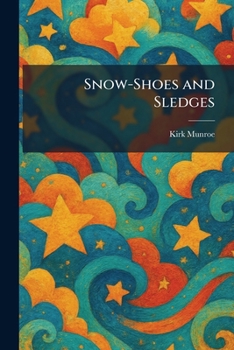
Snow-Shoes and Sledges

"Snow-Shoes and Sledges" is a thrilling adventure novel that follows the perilous journey of two young protagonists, Phil Ryder and Serge Belcof, through the unforgiving landscapes of the Alaskan and Yukon wilderness. Serving as a direct sequel to "The Fur-Seal's Tooth", the narrative dives deep into the challenges of Arctic survival, featuring grueling treks across ice and snow, the vital role of sled dog teams, and the constant struggle against the elements.
Kirk Munroe expertly captures the rugged spirit of the northern frontier during the late nineteenth century. The story details the boys' encounters with indigenous communities and their resourcefulness in navigating a world where nature is both a majestic backdrop and a formidable adversary. Filled with authentic period details and a fast-paced plot, the work remains a compelling example of classic juvenile adventure literature. It highlights themes of friendship, perseverance, and the timeless lure of exploration in one of the earth's last great frontiers.
This work has been selected by scholars as being culturally important, and is part of the knowledge base of civilization as we know it. This work was reproduced from the original artifact, and remains as true to the original work as possible. Therefore, you may see the original copyright references, library stamps (as most of these works have been housed in our most important libraries around the world), and other notations in the work.
This work is in the public domain in the United States of America, and possibly other nations. Within the United States, you may freely copy and distribute this work, as no entity (individual or corporate) has a copyright on the body of the work.
As a reproduction of a historical artifact, this work may contain missing or blurred pages, poor pictures, errant marks, etc. Scholars believe, and we concur, that this work is important enough to be preserved, reproduced, and made generally available to the public. We appreciate your support of the preservation process, and thank you for being an important part of keeping this knowledge alive and relevant.
Customer Reviews
ThriftBooks ® and the ThriftBooks ® logo are registered trademarks of Thrift Books Global, LLC
