


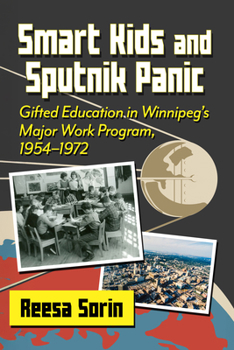
Smart Kids and Sputnik Panic: Gifted Education in Winnipeg's Major Work Program, 1954-1972

As the Cold War intensified in the 1950s and the launch of Sputnik shocked North America, the urgency to nurture future scientists, mathematicians, and leaders profoundly influenced the direction of gifted education. In Winnipeg, a program called Major Work emerged not only from educational ideals, but also from a global race for intellectual and technological superiority--a race that would redefine the purpose and goals of gifted programs across the continent.
This history traces the development and impact of the Major Work program (1954-1972) as one of Canada's first large-scale efforts to educate academically gifted children. It draws on archival records, media reports, and the voices of more than 200 former students, parents, and teachers--shared through surveys, interviews, and focus groups. Their reflections reveal the richness and contradictions of the Major Work experience: the sense of belonging and the weight of expectation, the exhilaration of learning and the long-term effects of being labelled "gifted." Combining historical research with personal narrative, this work is both a record and a contemplation--on education, childhood, and the complex legacy of a program that shaped lives in ways no one could have fully predicted.
Customer Reviews
ThriftBooks ® and the ThriftBooks ® logo are registered trademarks of Thrift Books Global, LLC
