


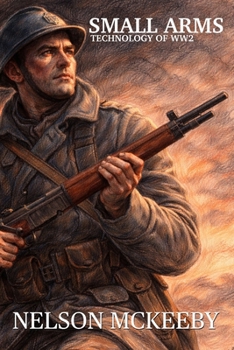
Small Arms Technology of WW2: Technology of WW2 Series

Small Arms Technology of World War II examines the infantry weapons that defined twentieth-century ground combat at the moment they reached full industrial maturity. Rather than focusing on isolated "iconic" arms, this volume situates rifles, machine guns, pistols, and automatic weapons within the technical, industrial, and doctrinal systems that produced and employed them.
The book traces the evolution of small arms from late nineteenth-century foundations-smokeless powder, repeating mechanisms, and standardized production-through their wartime application at unprecedented scale. National industries are examined on their own terms, from export-driven manufacturers such as Belgium and Czechoslovakia to state-centered systems in France and Britain, and selective, climate-driven production in Finland and Australia. Weapon design is treated as an outcome of manufacturing capability, logistics, and training rather than abstract innovation.
Individual chapters address feeding systems, thermal management, squad-level firepower, and the integration of rifles, automatic weapons, and machine guns into coherent infantry organizations. Case studies range from widely issued service arms to specialized designs that illuminate broader technical tradeoffs. Throughout, emphasis is placed on how weapons were actually built, supplied, maintained, and used in combat.
Written as a technical and historical reference, Small Arms Technology of World War II is intended for readers seeking a clear understanding of how infantry weapons functioned within the realities of industrial war.
Related Subjects
HistoryCustomer Reviews
ThriftBooks® and the ThriftBooks® logo are registered trademarks of Thrift Books Global, LLC
