


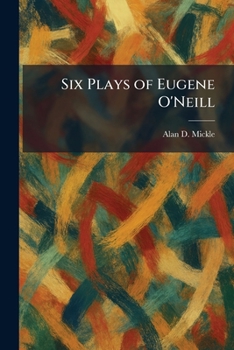
Six Plays of Eugene O'Neill

Select Format
Select Condition 
Book Overview
"Six Plays of Eugene O'Neill" is a compelling critical study of one of the most influential figures in the history of American theater. Written by critic Alan D. Mickle during a period of O'Neill's burgeoning international fame, this work provides an insightful analysis of the themes, structures, and psychological depths found within O'Neill's early dramatic output.
The book explores the revolutionary techniques that defined O'Neill's contribution to the stage, including his use of realism and expressionism to portray the complexities of the human spirit. Mickle examines the playwright's unique ability to weave tragic narratives that resonate with universal truths, offering readers a contemporary perspective on how these plays challenged and transformed theatrical conventions in the early 20th century.
As a vital piece of literary commentary, "Six Plays of Eugene O'Neill" serves as both an introduction for new readers and a scholarly resource for students of drama. It highlights the somber beauty and intellectual rigor of O'Neill's writing, emphasizing his status as a cornerstone of modern literature. This analysis remains an essential guide for anyone seeking to understand the enduring impact of O'Neill's masterpieces on the global stage.
This work has been selected by scholars as being culturally important, and is part of the knowledge base of civilization as we know it. This work was reproduced from the original artifact, and remains as true to the original work as possible. Therefore, you may see the original copyright references, library stamps (as most of these works have been housed in our most important libraries around the world), and other notations in the work.
This work is in the public domain in the United States of America, and possibly other nations. Within the United States, you may freely copy and distribute this work, as no entity (individual or corporate) has a copyright on the body of the work.
As a reproduction of a historical artifact, this work may contain missing or blurred pages, poor pictures, errant marks, etc. Scholars believe, and we concur, that this work is important enough to be preserved, reproduced, and made generally available to the public. We appreciate your support of the preservation process, and thank you for being an important part of keeping this knowledge alive and relevant.
Customer Reviews
ThriftBooks ® and the ThriftBooks ® logo are registered trademarks of Thrift Books Global, LLC
