


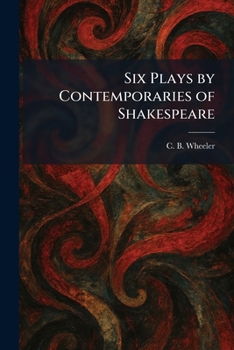
Six Plays by Contemporaries of Shakespeare

"Six Plays by Contemporaries of Shakespeare" is a curated collection that showcases the vibrant and diverse theatrical landscape of the English Renaissance. While William Shakespeare remains the era's most famous figure, this volume highlights the exceptional talent of his peers, whose works were equally influential in shaping the development of early modern drama. This anthology brings together a selection of tragedies and comedies that illustrate the stylistic breadth and thematic complexity of the Elizabethan and Jacobean stages.
Readers will discover the raw power, poetic intensity, and dark humor that characterized the era's playwriting. From tales of domestic intrigue and political ambition to explorations of human morality and social satire, these plays offer a comprehensive look at the cultural concerns of the late sixteenth and early seventeenth centuries. Each piece serves as a testament to the creative energy of London's bustling theater scene, where playwrights competed and collaborated to produce some of the most enduring works in the English language.
This collection is a valuable resource for students of literature, theater history, and anyone seeking to understand the rich dramatic context from which the greatest works of Western literature emerged. By presenting these masterpieces alongside one another, the volume provides a deeper appreciation for the golden age of English drama.
This work has been selected by scholars as being culturally important, and is part of the knowledge base of civilization as we know it. This work was reproduced from the original artifact, and remains as true to the original work as possible. Therefore, you may see the original copyright references, library stamps (as most of these works have been housed in our most important libraries around the world), and other notations in the work.
This work is in the public domain in the United States of America, and possibly other nations. Within the United States, you may freely copy and distribute this work, as no entity (individual or corporate) has a copyright on the body of the work.
As a reproduction of a historical artifact, this work may contain missing or blurred pages, poor pictures, errant marks, etc. Scholars believe, and we concur, that this work is important enough to be preserved, reproduced, and made generally available to the public. We appreciate your support of the preservation process, and thank you for being an important part of keeping this knowledge alive and relevant.
Customer Reviews
ThriftBooks ® and the ThriftBooks ® logo are registered trademarks of Thrift Books Global, LLC
