


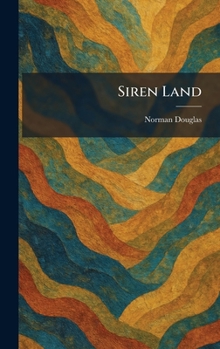
Siren Land

Select Format
Select Condition 
Book Overview
"Siren Land" is an evocative and scholarly exploration of the sun-drenched landscapes and rich mythological history of the Sorrento peninsula and the island of Capri. Written with Norman Douglas's characteristic wit and intellectual depth, this travel classic delves into the legends of the Sirens who were said to inhabit these rocky shores, weaving together ancient Greek mythology with the lived experiences of the local people and the physical geography of the region.
The work serves as more than a mere guidebook; it is a profound meditation on the spirit of place, blending archaeology, folklore, and natural history into a seamless narrative. Douglas guides the reader through olive groves and over limestone cliffs, reflecting on the influence of historical figures like the Emperor Tiberius and the enduring allure of the Mediterranean way of life. His prose captures the rugged beauty of the Italian coastline while offering insightful, often skeptical, critiques of modern civilization compared to the pagan past.
Regarded as a masterpiece of travel literature, "Siren Land" remains a vital companion for those fascinated by the intersection of geography, history, and myth. It invites readers to rediscover a landscape where history is etched into every stone and where the echoes of antiquity still resonate through the modern world.
This work has been selected by scholars as being culturally important, and is part of the knowledge base of civilization as we know it. This work was reproduced from the original artifact, and remains as true to the original work as possible. Therefore, you may see the original copyright references, library stamps (as most of these works have been housed in our most important libraries around the world), and other notations in the work.
This work is in the public domain in the United States of America, and possibly other nations. Within the United States, you may freely copy and distribute this work, as no entity (individual or corporate) has a copyright on the body of the work.
As a reproduction of a historical artifact, this work may contain missing or blurred pages, poor pictures, errant marks, etc. Scholars believe, and we concur, that this work is important enough to be preserved, reproduced, and made generally available to the public. We appreciate your support of the preservation process, and thank you for being an important part of keeping this knowledge alive and relevant.
Customer Reviews
ThriftBooks ® and the ThriftBooks ® logo are registered trademarks of Thrift Books Global, LLC
