


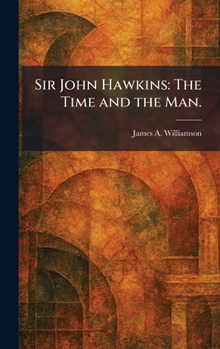
Sir John Hawkins: The Time and the Man.

"Sir John Hawkins: The Time and the Man" is a comprehensive and scholarly biography of one of the most pivotal figures in Elizabethan maritime history. Written by acclaimed historian James A. Williamson, the work delves into the life and career of Sir John Hawkins, a man whose influence shaped the course of English naval power and early colonial expansion. Through a detailed analysis of Hawkins' roles as a navigator, merchant, and naval administrator, Williamson paints a vivid picture of the Elizabethan age-a period defined by exploration, high-seas adventure, and the brewing conflict with the Spanish Empire.
The book examines Hawkins' innovative contributions to naval architecture and his administrative reforms that prepared the Royal Navy for the challenge of the Spanish Armada. Beyond his military and technical achievements, this biography explores the complex political and economic landscape of the sixteenth century, positioning Hawkins not just as a sea captain, but as a central figure in the birth of British maritime supremacy. "Sir John Hawkins: The Time and the Man" remains an essential resource for readers interested in maritime history, Tudor politics, and the biographical study of the men who built the foundations of the British Empire.
This work has been selected by scholars as being culturally important, and is part of the knowledge base of civilization as we know it. This work was reproduced from the original artifact, and remains as true to the original work as possible. Therefore, you may see the original copyright references, library stamps (as most of these works have been housed in our most important libraries around the world), and other notations in the work.
This work is in the public domain in the United States of America, and possibly other nations. Within the United States, you may freely copy and distribute this work, as no entity (individual or corporate) has a copyright on the body of the work.
As a reproduction of a historical artifact, this work may contain missing or blurred pages, poor pictures, errant marks, etc. Scholars believe, and we concur, that this work is important enough to be preserved, reproduced, and made generally available to the public. We appreciate your support of the preservation process, and thank you for being an important part of keeping this knowledge alive and relevant.
Customer Reviews
ThriftBooks ® and the ThriftBooks ® logo are registered trademarks of Thrift Books Global, LLC
