


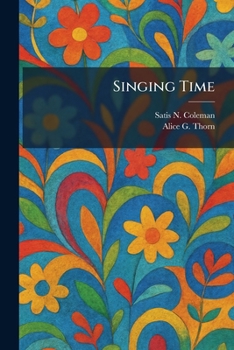
Singing Time

"Singing Time" is a foundational collection of songs designed specifically for the developmental needs and interests of very young children. Created by renowned music educators Satis N. Coleman and Alice G. Thorn, this work offers a delightful array of simple, engaging melodies that capture the essence of childhood experiences. From songs about animals and the natural world to everyday activities and rhythmic play, the compositions are tailored to be easily learned and enjoyed by nursery and primary school students.
The work serves as both a practical resource for teachers and parents and a significant contribution to the field of early childhood music education. Each piece is crafted to encourage participation, foster a love for music, and support the natural vocal range of young singers. By focusing on themes relevant to a child's daily life, "Singing Time" bridges the gap between play and formal instruction. With its emphasis on creative expression and rhythmic development, this collection remains a timeless treasury of musical gems that highlights the importance of song in a child's early years. It is an essential volume for anyone interested in the history of music pedagogy and the enduring power of simple, beautiful melodies.
This work has been selected by scholars as being culturally important, and is part of the knowledge base of civilization as we know it. This work was reproduced from the original artifact, and remains as true to the original work as possible. Therefore, you may see the original copyright references, library stamps (as most of these works have been housed in our most important libraries around the world), and other notations in the work.
This work is in the public domain in the United States of America, and possibly other nations. Within the United States, you may freely copy and distribute this work, as no entity (individual or corporate) has a copyright on the body of the work.
As a reproduction of a historical artifact, this work may contain missing or blurred pages, poor pictures, errant marks, etc. Scholars believe, and we concur, that this work is important enough to be preserved, reproduced, and made generally available to the public. We appreciate your support of the preservation process, and thank you for being an important part of keeping this knowledge alive and relevant.
Customer Reviews
ThriftBooks ® and the ThriftBooks ® logo are registered trademarks of Thrift Books Global, LLC
