


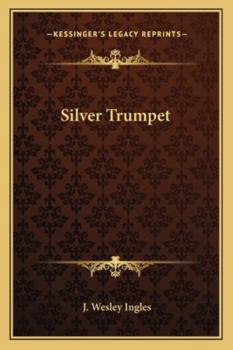
Silver Trumpet
No Customer Reviews

Select Format
Select Condition 
Book Overview
Silver Trumpet is a novel written by J. Wesley Ingles. The story is about a young boy named David who discovers a mysterious silver trumpet in his grandfather's attic. As he begins to play the trumpet, David is transported to a magical world where he meets a group of musicians who are on a quest to find the legendary Golden Harp. Along the way, David learns valuable lessons about courage, friendship, and the power of music. The book is filled with adventure, mystery, and a touch of fantasy that will captivate readers of all ages. With its engaging plot and relatable characters, Silver Trumpet is a must-read for anyone who loves a good adventure story.This scarce antiquarian book is a facsimile reprint of the old original and may contain some imperfections such as library marks and notations. Because we believe this work is culturally important, we have made it available as part of our commitment for protecting, preserving, and promoting the world's literature in affordable, high quality, modern editions, that are true to their original work.
Format:Paperback
Language:English
ISBN:1162804548
ISBN13:9781162804545
Release Date:September 2010
Publisher:Kessinger Publishing
Length:364 Pages
Weight:1.07 lbs.
Dimensions:0.8" x 6.0" x 9.0"
Customer Reviews
0 rating
Copyright © 2026 Thriftbooks.com
Terms of Use | Privacy Policy | Do Not Sell/Share My Personal Information | Cookie Policy | Cookie Preferences | Accessibility Statement
ThriftBooks ® and the ThriftBooks ® logo are registered trademarks of Thrift Books Global, LLC
ThriftBooks ® and the ThriftBooks ® logo are registered trademarks of Thrift Books Global, LLC
