
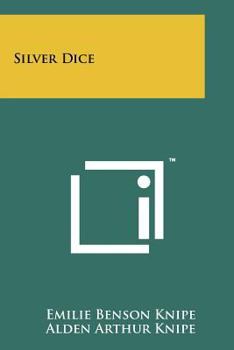
"Silver Dice" is a compelling historical novel set against the vibrant and often treacherous backdrop of the eighteenth century. Written by the prolific writing duo Emilie Benson Knipe and Alden Arthur Knipe, the narrative weaves an intricate tale of high-stakes intrigue, mystery, and romance. The story follows its protagonists through a world where fortune is as fickle as a roll of the dice, exploring themes of honor, social standing, and the pursuit of truth within the rigid structures of period society.
Rich in atmospheric detail, the book captures both the elegance and the underlying dangers of its era. As the characters navigate a web of secrets and shifting allegiances, readers are treated to a masterfully paced blend of suspense and historical authenticity. "Silver Dice" stands as a classic example of early twentieth-century historical fiction, showcasing the authors' ability to craft engaging stories that transport the reader to another time. It remains a captivating read for those who enjoy tales of adventure and the enduring power of character in the face of uncertainty.
This work has been selected by scholars as being culturally important, and is part of the knowledge base of civilization as we know it. This work was reproduced from the original artifact, and remains as true to the original work as possible. Therefore, you may see the original copyright references, library stamps (as most of these works have been housed in our most important libraries around the world), and other notations in the work.
This work is in the public domain in the United States of America, and possibly other nations. Within the United States, you may freely copy and distribute this work, as no entity (individual or corporate) has a copyright on the body of the work.
As a reproduction of a historical artifact, this work may contain missing or blurred pages, poor pictures, errant marks, etc. Scholars believe, and we concur, that this work is important enough to be preserved, reproduced, and made generally available to the public. We appreciate your support of the preservation process, and thank you for being an important part of keeping this knowledge alive and relevant.

