


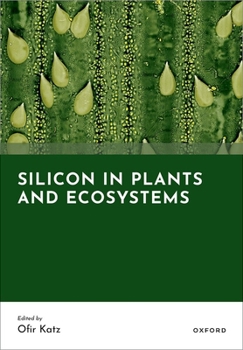
Silicon in Plants and Ecosystems
No Customer Reviews

When we look at plants, we see their flowers, leaves, branches, and roots. When we look inside plants, we see their tissues, cells, and diverse organic chemistry. However, there is a whole other world of inorganic chemistry within plants; and few of these chemical elements are more fascinating than silicon, with its varying concentrations in plants and multiple functions in plant life. Silicon in plants constitutes a major part in how ecosystems are structured and function, with important implications for agriculture and ecology in times of environmental change. Silicon in Plants and Ecosystems reviews the current knowledge of silicon in plants and ecosystems, culminating from over 100 years of research. It focuses on the major advancements since the beginning of the 21st century as well as emphasizing knowledge gaps and prospects for research and application. It puts major emphasis on ecosystem approaches, including how silicon is involved in plant interactions with the soil, various other organisms (e.g., bacteria, herbivores, and other plants) to whole-ecosystem and global processes. Consisting of contributions from some of the leading authorities in the field, this book overviews silicon availability in the soil, its uptake and deposition by plants, its functions within plants and their interactions with herbivores and microorganisms, its cycling and interactions with other biogeochemical cycles (focusing on the carbon cycle), and implications for climate change.
Format:Hardcover
Language:English
ISBN:0197766528
ISBN13:9780197766521
Release Date:October 2025
Publisher:Oxford University Press, USA
Related Subjects
NatureCustomer Reviews
0 rating
Copyright © 2026 Thriftbooks.com
Terms of Use | Privacy Policy | Do Not Sell/Share My Personal Information | Cookie Policy | Cookie Preferences | Accessibility Statement
ThriftBooks ® and the ThriftBooks ® logo are registered trademarks of Thrift Books Global, LLC
ThriftBooks ® and the ThriftBooks ® logo are registered trademarks of Thrift Books Global, LLC
