


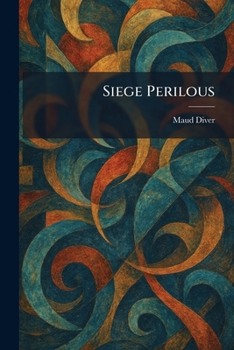
Siege Perilous

"Siege Perilous" is a compelling collection of short stories by Maud Diver, a celebrated voice in Anglo-Indian literature. Set against the vibrant and often turbulent backdrop of colonial India, these tales explore the intricate lives of British officers, their families, and the local population during the early 20th century. Diver skillfully weaves themes of duty, honor, and romance, offering readers a window into the psychological and social complexities of life under the British Raj.
From the rugged mountain passes of the frontier to the refined social circles of the plains, the narratives capture the tension, sacrifice, and beauty of a bygone era. Through vivid characterizations and atmospheric settings, "Siege Perilous" delves into the personal struggles and cultural encounters that defined the Anglo-Indian experience. This collection stands as a significant contribution to historical fiction, showcasing Diver's talent for blending high-stakes drama with insightful observation of the human condition in a colonial context.
This work has been selected by scholars as being culturally important, and is part of the knowledge base of civilization as we know it. This work was reproduced from the original artifact, and remains as true to the original work as possible. Therefore, you may see the original copyright references, library stamps (as most of these works have been housed in our most important libraries around the world), and other notations in the work.
This work is in the public domain in the United States of America, and possibly other nations. Within the United States, you may freely copy and distribute this work, as no entity (individual or corporate) has a copyright on the body of the work.
As a reproduction of a historical artifact, this work may contain missing or blurred pages, poor pictures, errant marks, etc. Scholars believe, and we concur, that this work is important enough to be preserved, reproduced, and made generally available to the public. We appreciate your support of the preservation process, and thank you for being an important part of keeping this knowledge alive and relevant.
Customer Reviews
ThriftBooks ® and the ThriftBooks ® logo are registered trademarks of Thrift Books Global, LLC
