


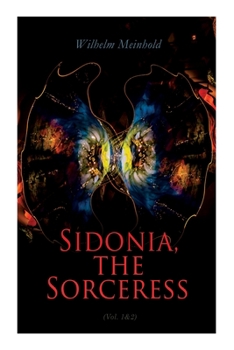
Sidonia, the Sorceress (Vol. 1&2): A Destroyer of the Whole Reigning Ducal House of Pomerania
(Book #1 in the Sidonia the Sorceress Series)
No Customer Reviews

Select Format
Select Condition 
Book Overview
In "Sidonia, the Sorceress," Wilhelm Meinhold intricately weaves a tale steeped in the gothic and supernatural traditions of 19th-century literature. This two-volume work delves into the life of Sidonia, an alleged witch in 17th-century Pomerania, and navigates the turbulent waters of superstition, religious fervor, and societal condemnation. Meinhold's narrative style is characterized by its rich, descriptive prose and a meticulous attention to the period's socio-cultural milieu, immersing readers in a world where folklore and fanaticism collide. The text balances elements of historical fiction with a deeply psychological exploration of its characters, creating a complex tapestry that reflects the anxieties of a society grappling with the unknown. Wilhelm Meinhold, a Protestant clergyman and historian, drew inspiration from the real-life trials of women accused of witchcraft, a highly charged issue in his era. His dual background in theology and history enabled him to craft not just a gripping narrative, but also a poignant commentary on the moral complexities and inherent misogyny present in the witch hunts. Meinhold's engagement with the themes of power, fear, and faith is both reflective of his own context and forward-thinking in its exploration of gender dynamics. I highly recommend "Sidonia, the Sorceress" to readers interested in gothic literature, religious studies, and the historical roots of witchcraft. This seminal work not only provides an enthralling narrative but also invites a deeper reflection on the societal themes of fear and power dynamics. Its profound insights resonate beyond its time, making it a vital read for those who appreciate literature that challenges and enlightens.
Format:Paperback
Language:English
ISBN:8027340659
ISBN13:9788027340651
Release Date:April 2021
Publisher:E-Artnow
Length:444 Pages
Weight:1.31 lbs.
Dimensions:0.9" x 6.0" x 9.0"
Customer Reviews
0 rating
Copyright © 2026 Thriftbooks.com
Terms of Use | Privacy Policy | Do Not Sell/Share My Personal Information | Cookie Notice | Cookie Preferences | Accessibility Statement
ThriftBooks ® and the ThriftBooks ® logo are registered trademarks of Thrift Books Global, LLC
ThriftBooks ® and the ThriftBooks ® logo are registered trademarks of Thrift Books Global, LLC
