


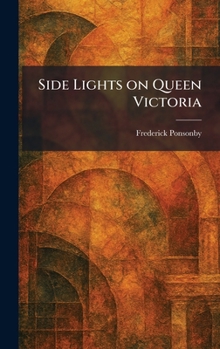
Side Lights on Queen Victoria

"Side Lights on Queen Victoria" offers an intimate and revelatory glimpse into the private life and reign of one of Britain's most iconic monarchs. Written by Frederick Ponsonby, who served for decades within the royal household, this work provides a unique perspective that transcends official histories and formal biographies. Through a series of detailed anecdotes and personal observations, Ponsonby brings the Victorian court to life, shedding light on the Queen's personality, her relationships with her ministers, and the intricate etiquette of the era.
The narrative captures the nuances of Victoria's character-from her formidable sense of duty to her more human moments of humor and grief. As an insider with unparalleled access, Ponsonby records the daily routines, diplomatic tensions, and social shifts that defined the late nineteenth century. "Side Lights on Queen Victoria" serves as both a primary historical source and an engaging literary portrait, offering readers a rare behind-the-scenes look at the challenges of leadership and the realities of life behind palace walls. It is an essential volume for those interested in the inner workings of the British monarchy and the social fabric of the Victorian age.
This work has been selected by scholars as being culturally important, and is part of the knowledge base of civilization as we know it. This work was reproduced from the original artifact, and remains as true to the original work as possible. Therefore, you may see the original copyright references, library stamps (as most of these works have been housed in our most important libraries around the world), and other notations in the work.
This work is in the public domain in the United States of America, and possibly other nations. Within the United States, you may freely copy and distribute this work, as no entity (individual or corporate) has a copyright on the body of the work.
As a reproduction of a historical artifact, this work may contain missing or blurred pages, poor pictures, errant marks, etc. Scholars believe, and we concur, that this work is important enough to be preserved, reproduced, and made generally available to the public. We appreciate your support of the preservation process, and thank you for being an important part of keeping this knowledge alive and relevant.
Customer Reviews
ThriftBooks ® and the ThriftBooks ® logo are registered trademarks of Thrift Books Global, LLC
