


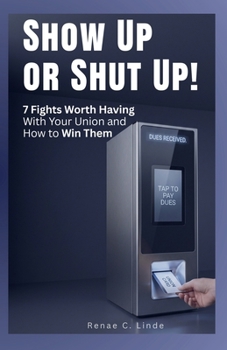
Show Up or Shut Up!: 7 Fights Worth Having With Your Union and How To Win Them

American workers need collective bargaining. But when financial opacity, uncontested elections, closed bargaining, weak grievance enforcement, two-tier compensation, unaccountable political spending, and low member participation become routine, formal democracy can remain intact while meaningful member control disappears.
Show Up or Shut Up examines how that institutional drift happens and why replacing a few leaders rarely fixes it. Drawing on labor law, government data, enforcement records, research, documented reform efforts, and the author's experience as a union member, steward, elected officer, and contract negotiator, the book traces seven systems where accountability can quietly break down.
It examines how members can evaluate union finances, understand election and bargaining procedures, identify weaknesses in grievance enforcement, assess internal pay inequities, examine political spending, and recognize where participation has become more symbolic than real.
The book does not argue that union leadership alone is the problem. Structural barriers can make participation difficult, but member disengagement creates its own vacuum. When workers treat dues as payment for a service rather than accepting responsibility for governance, authority naturally concentrates among the people who remain involved.
Each chapter closes with a one-page reflection worksheet designed to help readers ask practical questions about their own union: What do you know? What can you verify? Where does real control sit? What, if anything, are you willing to do about it?
Written for union members, stewards, officers, organizers, and workers interested in labor governance, Show Up or Shut Up is not an anti-union argument or a legal manual. It is a systemic critique of how collective institutions drift, and how informed members can push them back toward transparency, accountability, and real democratic control.
Union membership is not a paid service. It's a governing responsibility.
Customer Reviews
ThriftBooks ® and the ThriftBooks ® logo are registered trademarks of Thrift Books Global, LLC
