


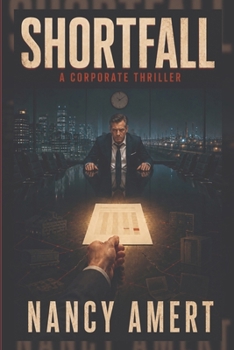
Shortfall: A Corporate Thriller

Preliminary financial results show that American Ledger Devices Corporation is about to miss Wall Street's quarterly earnings expectations. Inside headquarters, panic spreads. A public shortfall could hammer the stock price, erase bonuses, trigger layoffs, and end executive careers.
With seventy-two hours before the books close, the CFO gives his leadership team one order: find revenue-anywhere.
The Divestiture Committee finds $250 million by selling Candor Works, an aging upstate factory. Legal is warned to expect an "unnatural" deal and not stand in the way.
The committee moves fast. Nobody asks what else they are selling.
On paper, the transaction is a triumph. The quarter is saved. Executive careers are protected. Five local men acquire the factory and rescue twelve hundred jobs-and the town that depends on them.
Then a credit request crosses Paula Campbell's desk.
Candor International, the buyers' newly established company, wants a nine-figure credit line. The risk model rejects it. The company has no operating history, weak financials, too much debt, and almost no cash. Sales demands an exception because a major order must be booked-and the parts needed to fill it can come only from Candor.
As director of global credit risk for ALD Global Finance, Paula is supposed to find a way to approve the request.
Instead, she starts asking questions.
What she uncovers is staggering. ALD has unknowingly transferred to Candor's new owners the patent rights, proprietary molds, one-of-a-kind tooling, and specialized manufacturing processes essential to its most profitable products. Nearly three-quarters of the corporation's product lines depend on parts, components, or specialized materials that only Candor can produce.
Paula refuses the credit line. Her boss refuses it too. She takes the evidence to ALD's Treasurer-and watches the color drain from his face.
The five buyers thought they were saving a factory. Billionaire Henry Kraus realizes they bought something far more valuable: leverage over one of the largest corporations in the world.
Then Candor submits its first "price adjustment."
Forty-three pages of arithmetic. Eight million dollars due in five days.
Pay it, and the parts keep moving.
Refuse, and production lines around the world begin shutting down.
There is no threat in writing. Henry is too careful for that. Every demand looks like an ordinary commercial transaction-routine enough for Procurement, defensible enough for Legal, and quiet enough to keep the auditors away.
But eight million dollars is only the opening bid.
As Candor's five owners divide over money, loyalty, twelve hundred jobs, and the survival of their town, ALD's executives fight to contain a disaster of their own making. To escape, the corporation may have to spend hundreds of millions buying back what it sold-while convincing employees, investors, and Wall Street that nothing went wrong.
Paula can see the freight train coming. Stopping it means challenging executives who built their careers by agreeing with one another-and accepting that saving the company may destroy her own career. When the fight returns to the boardroom where the sale began, Henry may not be the only man who understands leverage. The deciding vote may belong to the least powerful person at the table.
SHORTFALL is a gritty corporate thriller about quarter-end panic, groupthink, and the price of dissent. Anyone who has worked inside a large corporation will recognize the power plays, the pressure, the euphemisms, and the fear that silences dissent in the meeting where a powerful executive forces a unanimous decision before anyone even considers the consequences.
Customer Reviews
ThriftBooks ® and the ThriftBooks ® logo are registered trademarks of Thrift Books Global, LLC
