


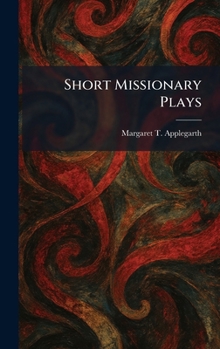
Short Missionary Plays

"Short Missionary Plays" is a compelling collection of dramatic works designed to inspire and educate audiences about the global scope of Christian missions. Written by Margaret T. Applegarth, a prolific author known for her dedication to religious education, these plays offer practical and engaging material for church groups, schools, and community organizations. The volume includes a variety of scripts that tackle diverse themes, from the challenges faced by missionaries in distant lands to the universal call for compassion and service.
Each play is crafted with simplicity and impact in mind, making them accessible for amateur performers while maintaining a powerful spiritual message. By dramatizing the lives of those dedicated to faith and social work, the collection serves as both a teaching tool and a call to action. Margaret T. Applegarth masterfully blends narrative with moral instruction, ensuring that each scene resonates with the spiritual values and missionary zeal of the early 20th century. This work remains a significant historical resource for understanding the methods used to promote cross-cultural awareness and religious commitment within faith-based communities.
This work has been selected by scholars as being culturally important, and is part of the knowledge base of civilization as we know it. This work was reproduced from the original artifact, and remains as true to the original work as possible. Therefore, you may see the original copyright references, library stamps (as most of these works have been housed in our most important libraries around the world), and other notations in the work.
This work is in the public domain in the United States of America, and possibly other nations. Within the United States, you may freely copy and distribute this work, as no entity (individual or corporate) has a copyright on the body of the work.
As a reproduction of a historical artifact, this work may contain missing or blurred pages, poor pictures, errant marks, etc. Scholars believe, and we concur, that this work is important enough to be preserved, reproduced, and made generally available to the public. We appreciate your support of the preservation process, and thank you for being an important part of keeping this knowledge alive and relevant.
Customer Reviews
ThriftBooks ® and the ThriftBooks ® logo are registered trademarks of Thrift Books Global, LLC
